Контекст
Кохання та романтика
Карта Меч Трійка у контексті любові аналізується як символ емоційного болю, розчарування або відчуття розриву. Вона вказує на ситуації, де почуття та раціональні судження вступають у конфлікт: критичні слова, відсторонення, зрада або нездійснені очікування можуть спричиняти ясне, але болісне усвідомлення факту, який раніше ігнорувався. Ця карта підкреслює розрив між переживанням і розумінням; іноді саме раціональний огляд подій робить біль різкішим.
У любовних взаєминах Меч Трійка часто фокусується на процесі прояснення і вираження правди, навіть якщо це тимчасово завдає болю. Вона підкреслює важливість прямого спілкування, розпізнавання реальних причин конфлікту і відокремлення конструктивної критики від руйнівних образ. Карта не нав'язує однозначного вироку стосункам, а радше позначає період, коли потрібно працювати з емоційною раною: виявити, проговорити і почати інтегрувати досвід.
З психологічної точки зору Меч Трійка говорить про необхідність прожити сум, дозволити собі відчути втрату і поступово відновити здатність до довіри або ясного вибору. Це також час аналізу меж і власних потреб: чи відповідає партнерство реальним цінностям і чи є умови для взаємного поваги й безпеки. У деяких варіантах карта може вказувати на втручання третьої сторони або на вияв прихованої інформації, яка змінює сприйняття стосунків.
Освітня інтерпретація Меча Трійки у любові наголошує на роботі з інформацією і емоціями — відвертість, самоаналіз і процес зцілення важливіші за негайні рішення. Карта спонукає до усвідомленого підходу: розпізнати джерело болю, дати йому слово, і на основі зрозумілого аналізу обрати подальші кроки, що базуються на потребах і межах обох партнерів.
Кар'єра та посада
Трійка Мечів у кар’єрному контексті означає розриви в системі комунікації, болючі рішення та необхідність розглянути факти без емоційного прикраси. Символіка мечів підкреслює роль мислення, логіки і слова: карта часто вказує на критику, непорозуміння або втрату, що має інтелектуальний або комунікативний характер — наприклад, різка оцінка результатів, розрив робочих відносин, скасування проєкту або ж очевидні помилки у плануванні. Біль тут скоріше як каталізатор для очищення: усвідомлення причини конфлікту дозволяє переструктурувати процеси і встановити чіткіші правила.
У практичному сенсі карта підкреслює важливість прозорості, документування та фактів у роботі: точні записи, чіткі домовленості та регулярний зворотний зв’язок знижують ризик ескалації. Водночас Трійка Мечів нагадує про потребу в осмисленні наслідків — професійний криза часто відкриває слабкі місця в системі, які варто виправити, а не замовчувати. Це також сигнал до опрацювання емоційного навантаження на команду: ігнорування стресу та образ може підривати ефективність і творчість.
Інтерпретація не фатальна: карта радить підходити до ситуації аналітично, розглядати альтернативи, залучати посередництво або професійний супровід за потреби і працювати над чіткістю ролей та очікувань. Замість уникнення конфлікту варто вибудувати процеси, які перетворять болючі уроки на практичні зміни й запобігають повторенню подібних помилок.
Значення фінансів
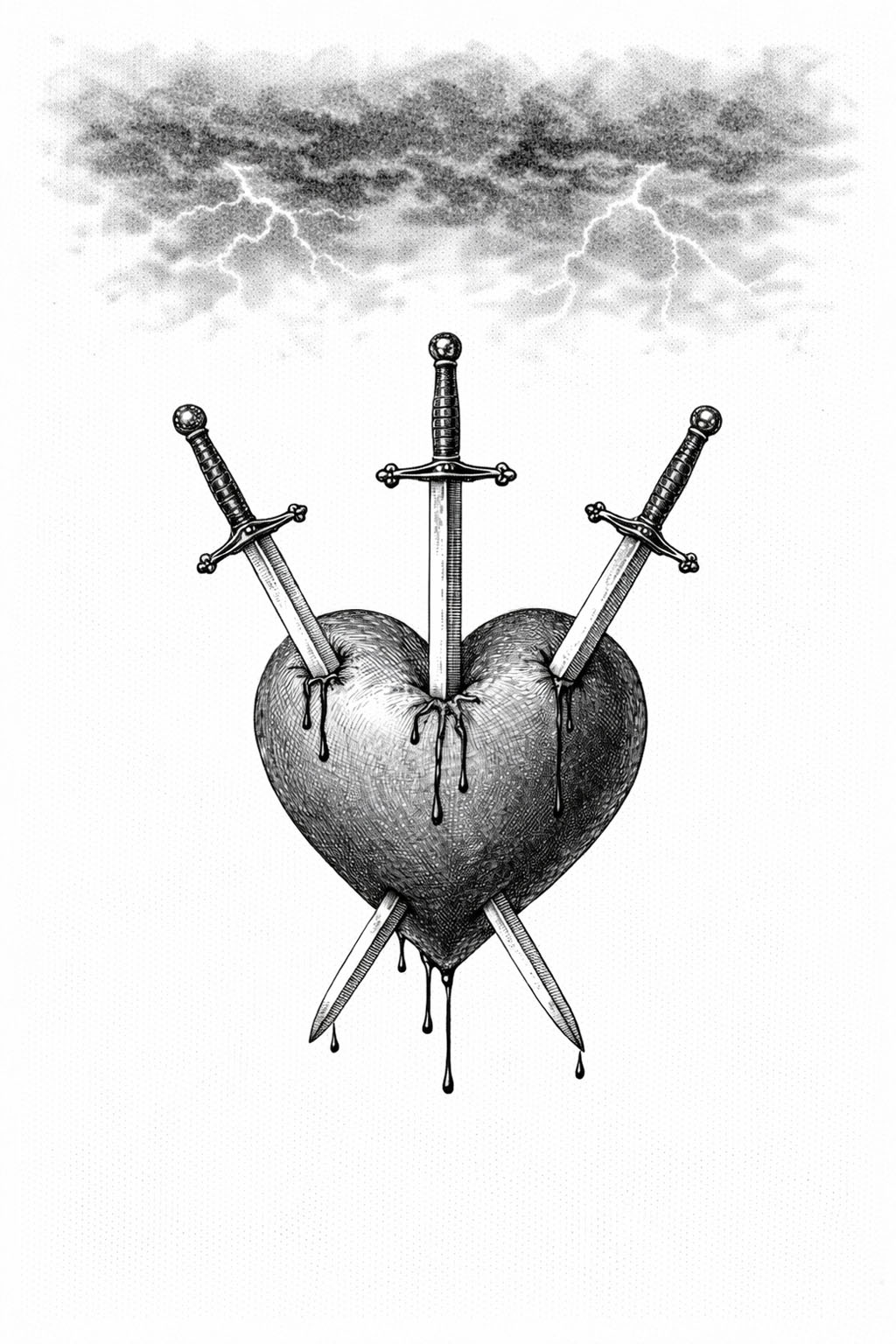
Трійка мечів у фінансовому контексті виступає як символ розриву, гострих емоційних реакцій і відкриття неприємних фактів, що впливають на матеріальну сферу. Образ серця, проткнутого мечами, тут підкреслює не стільки буквальні збитки, скільки переживання через порушення довіри, розрив партнерських відносин або виявлення помилок у фінансових домовленостях. Це карта, що наголошує на необхідності зіткнутися з реальністю — визнати втрати, усвідомити причини небажаних наслідків і відокремити емоційну реакцію від практичних кроків.
У трактуванні для грошей Трійка мечів часто вказує на ситуації, де фінансові негаразди пов’язані з конфліктами, розірванням контрактів, розбіжностями з партнерами або несподіваними витратами, що виникли внаслідок помилок чи недогляду. Вона також підкреслює, що емоційний стан може спотворювати оцінку ризиків і призводити до поспішних рішень, які погіршують становище.
З методичної точки зору карта радить звернути увагу на фактологію: перевірити документи, провести ревізію рахунків, зафіксувати домовленості в письмовому вигляді і при необхідності залучити фахівців для оцінки ситуації. Корисним є розділення особистих і ділових фінансів, а також встановлення чітких меж у відносинах, що стосуються грошей. Емоційну реакцію варто признати, але відкласти радикальні фінансові кроки до моменту, коли рішення ґрунтуватимуться на реальних даних і зваженому аналізі.
Трійка мечів у навчальному ключі також нагадує про процес відновлення: усвідомлення помилок і втрат дає можливість змінити стратегію, закласти більш надійні механізми контролю й уникнути повторення подібних ситуацій у майбутньому.
Значення сім'ї
У сімейному контексті карта Трійка Мечів зазвичай вказує на емоційний біль, розчарування або конфлікт, який зачіпає відносини між близькими. Це може бути результат різних подій: від непорозумінь і відкритих сварок до зради чи важких відкриттів, що змінюють уявлення про ситуацію. Символіка карти підкреслює, що біль часто приходить через слова, істини або розриви очікувань, і його не варто ігнорувати.
Карта не дає остаточного вироку, натомість сигналізує про потребу в усвідомленні й опрацюванні емоцій. У практичному вимірі це означає перевірку фактів, спроби ясного і відповідального спілкування, а також увагу до власних меж і меж інших членів родини. Важливо відокремлювати реакції від реальних причин, дозволяти собі відчувати сум і не поспішати з радикальними рішеннями під впливом болю.
Трійка Мечів також нагадує про можливість трансформації через зцілення: визнання болю, вибачення, робота над відновленням довіри або свідоме переформування стосунків. У складних випадках корисною може бути професійна підтримка, яка допоможе обговорити проблему в безпечному середовищі і виокремити кроки для відновлення функціонування родини.
Психологія та розум
Трійка мечів у контексті психологічного стану описує гострий внутрішній розрив, відчуття болю, розчарування або зради, що впливає насамперед на мислення й емоції. Мечі традиційно пов’язані з інтелектом і процесами пізнання, тож образ пробитого серця підкреслює конфлікт між фактами, правдою або очікуваннями й емоційною реакцією на них. Це може бути реакція на втрачу, розрив стосунків, відкриття неприємної істини або сильне почуття відторгнення; у внутрішньому житті проявляється як шок, смуток, гостре переживання і схильність до румінації чи самокритики.
На рівні думок Трійка мечів часто сигналізує про застрягання в болючих інтерпретаціях, катастрофічні прогнози або повторне прокручування травматичного епізоду, що підсилює страждання. Психологічно це стан, коли серце й розум ніби перебувають у конфлікті: розум може фіксуватися на причинно-наслідкових зв’язках і розборах, тоді як емоції залишаються незавершеними й вимогливими. Важливо розрізняти гострий епізод болю від хронічних моделей, що посилюють уразливість.
Тлумачення цього стану має насамперед освітній характер: болючі переживання часто відкривають можливість для усвідомлення, переосмислення і встановлення меж. Процес може включати дозволення скорботі, роботу з мисленнєвими спотвореннями, вербалізацію емоцій і поступове відновлення відчуття власної цілісності. У професійному контексті це стан, коли може знадобитися підтримка — бесіда з близькими, психотерапевтична робота або інші безпечні способи опрацювання болю. Трійка мечів не є вироком, вона фіксує момент інтелектуально-емоційної розгерметизації, що, пройшовши через усвідомлення й опрацювання, може привести до ясності та нових меж у відносинах і внутрішньому житті.
Значення душі
Трійка Мечів у позиції «Душевне стан» позначає гострий емоційний або психологічний біль, який часто має інтелектуальний вимір — рани, завдані словами, розчарування через очікування або усвідомлення втрати. Це стан скорботи, розчарування або зради, коли відчуття болю чітке й пронизливе; увага спрямована на аналіз того, що сталося, на розпізнавання причин і наслідків, інколи супроводжується самокритикою та повторним програванням ситуації в думках.
Психологічно карта вказує на період, коли важливо відрізняти самі емоції від їхніх інтерпретацій. Біль виступає сигналом: він виділяє те, що потребує уваги, дозволяє побачити неіснуючі ілюзії та встановити межі. Водночас надмірна інтелектуалізація болю може затримувати процес зцілення — коли людина застрягає в аналізі причин, замість пережити емоцію й поступово інтегрувати її.
У практичному сенсі це може означати підвищену чутливість до критики, труднощі зі сном або концентрацією, схильність до румінацій і плачу, а також можливість глибшого усвідомлення власних потреб і кордонів. Трійка Мечів не лише про страждання; вона також про очищення шляхом усвідомлення і про потенціал трансформації, коли через прийняття і роботу зі своїми відчуттями формується більш реалістичне ставлення до себе й інших.