Контекст
Кохання та романтика
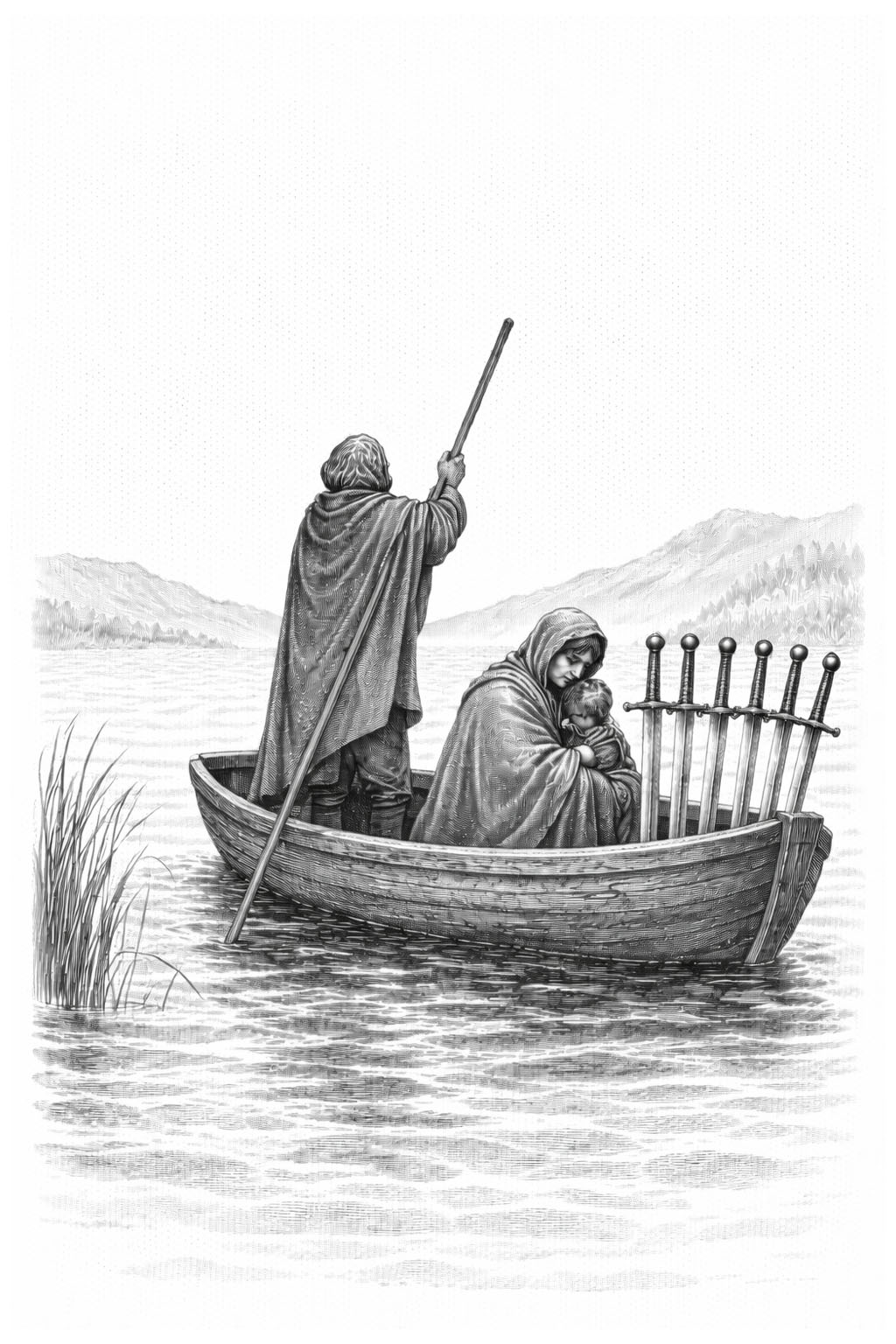
Шістка Мечів у контексті любовних стосунків описує процес переходу — від напруження, конфлікту або емоційного хаосу до більшої ясності і стабільності. Карта не обіцяє миттєвого вирішення, вона скоріше підкреслює факт руху: це може бути спільне або індивідуальне переміщення в просторі, зміна темпу відносин або внутрішня робота одного з партнерів, яка поступово змінює динаміку.
Аналітично це означає, що актуальні проблеми потребують відстороненого погляду, планування і поетапного виходу з кризової ситуації. У стосунках це часто проявляється як прагнення до мирного вирішення, готовність шукати підтримку, перенестися на «безпечнішу» територію спілкування або створити відстань, необхідну для переосмислення. Також карта вказує на необхідність інформаційної або емоційної обережності: не всі деталі можна вирішити одним розмовним «переходом», багато залежить від здатності партнерів працювати з травмами й історією.
Корисно розглядати Шістку Мечів як заклик до системності й терпіння: встановлювати межі, продумувати кроки, залучати ресурси (підтримку друзів, фахівців, конкретні домовленості) і робити вибори, які зменшують шкоду. Водночас карта попереджає про ризик уникнення: відстань може дати тимчасове полегшення, але не лікує неперебраних проблем, які можуть знову з’явитися пізніше. Найкорисніший підхід — поєднати рух уперед із свідомою роботою над причинами конфлікту і навчитися інтегрувати отриманий досвід у нову якість стосунків.
Кар'єра та посада
Шістка мечів у професійному контексті символізує перехід із складнішої ситуації до більш стабільної, але не негайне вирішення проблем. Це карта руху: зміну проєкту, тимчасовий відхід від конфліктного середовища, реструктуризацію обов’язків або переїзд на інше місце роботи. Вона підкреслює необхідність розумного планування та поступових кроків замість імпульсивних рішень.
Аналізуючи цю карту, корисно звернути увагу на те, що пересування часто має ознаки “транзиту” — стан тимчасового полегшення, який потребує подальшої праці для закріплення результатів. Може йтися про делегування складних завдань, передачу знань або документації, реорганізацію робочих процесів, скорочення навантаження з метою відновлення ефективності. Інколи карта вказує на необхідність звернутися за підтримкою колег або керівництва для безпечного переходу.
У професійному контексті також важливе усвідомлення ризиків ухиляння від вирішення кореневих причин проблем. Швидкий переїзд або зміна ролі може дати тимчасове полегшення, але не замінить аналізу помилок і навчання на досвіді. Практичні аспекти переходу — підготовка документів, план передачі обов’язків, чітке комунікування з командою — відіграють ключову роль у згладжуванні процесу.
З освітньої точки зору, Шістка мечів заохочує до стратегічного мислення під час змін: оцінити логістику переходу, врахувати навчальні потреби, фіксувати напрацювання і робити кроки, що забезпечують довгострокову стабільність, а не лише тимчасове полегшення.
Значення фінансів
Шістка Мечів у фінансовому контексті найчастіше символізує перехідну фазу — відхід від хаотичної або кризової ситуації до більш стабільного стану шляхом свідомих рішень і реорганізації ресурсів. Карта вказує на те, що нинішні зміни в грошах або інвестиціях мають логіку переміщення: перекази між рахунками, перерозподіл портфеля, закриття збиткових позицій або перенесення діяльності в інше місце з метою зменшення ризику. Цей процес рідко є миттєвим; швидше йдеться про поступове зменшення напруги і накопичення умов для подальшого відновлення.
У трактуванні Шістка Мечів також підкреслює важливість планування та ретельної логістики: важливо документувати дії, враховувати витрати на переорганізацію і оцінювати часові горизонти, оскільки перехід може вимагати тимчасових витрат або зниження ліквідності. Карта радить увагу до юридичних і податкових аспектів при переміщенні активів або зміні юрисдикції, а також співпрацю з фахівцями, щоб зробити перехід якомога більш безболісним. Загалом Шістка Мечів не обіцяє миттєвого вирішення, але вказує на раціональний, продуманий вихід із складнощів і нацеленість на стабілізацію фінансової ситуації через зміни та упорядкування.
Значення сім'ї
Шпага Шістка у контексті сім’ї відображає тему переходу — не стільки драматичну розв’язку, скільки перехідний етап, коли сімейна система рухається від напруження до спокійнішого стану. Символічно це може означати фізичний переїзд або подорож заради безпеки чи кращих умов, а також внутрішню зміну ставлення: поступове віддалення від конфліктів, пошук конструктивних рішень, перерозподіл ролей і обов’язків.
У читанні варто звернути увагу на те, чи цей рух свідомий і запланований, чи це реактивний відхід від проблем. Карта підкреслює важливість супроводу й підтримки — одна чи кілька осіб у родині можуть виступати «капітаном човна», організовуючи логістику, створюючи безпечний простір і допомагаючи іншим пережити зміни. Водночас підкреслюється потреба в емоційній роботі: з собою зазвичай ми переносимо «багаж» минулого, і без його опрацювання зміни залишаться частково поверхневими.
Практичний аспект Шпаги Шістки пов’язаний із плануванням переселення, юридичними або фінансовими кроками, а також з пошуком зовнішньої допомоги — медіації, терапії чи консультацій. Корисно розпитати, що саме в сім’ї потребує збереження і простору, що можна поступово відпустити, які кроки дозволять зробити перехід менш травматичним для найвразливіших членів. Можливі ризики — уникнення розв’язання кореневих питань, недооцінка емоційного впливу на дітей або ізоляція одного з членів сім’ї.
Психологія та розум
Шістка мечів у контексті психологічного стану описує стан переходу та переміщення свідомості: людина відійшла від гострої конфронтації або внутрішнього хаосу і перебуває в процесі переосмислення, відновлення та поступового віддалення від джерела стресу. Ця карта часто вказує на потребу в дистанціюванні — не як остаточному вирішенні проблеми, а як способі створити простір для обробки переживань, знайти ясність і знизити емоційне напруження.
Разом із полегшенням може зберігатися сум або ностальгія за втраченим; думки можуть бути зосереджені на плануванні подальших кроків, аналізі причин конфлікту та пошуку більш раціональних підходів. Інтелектуалізація почуттів, схильність до логічного осмислення і прагнення до безпечного середовища — типові риси цього стану. Водночас існує ризик уникання фундаментального опрацювання емоцій або відтермінування важливих рішень під виглядом «перехідного періоду».
Психологічно Шістка мечів описує проміжну фазу: обмежене полегшення, потребу в підтримці й часі для інтеграції досвіду, а також можливість зростання через рефлексію та структуроване планування подальших дій.
Значення душі
Шістка мечів у вимірі душевного стану позначає фазу переходу й переміщення свідомості від загостреного конфлікту або внутрішнього хаосу до більш організованого, дистанційованого сприйняття. Це образ подорожі вглиб себе або в напрямку стабілізації: думки поступово впорядковуються, стає легше тримати емоції під контролем і розглядати ситуацію з відстані, що дозволяє краще аналізувати причини переживань і робити усвідомлені кроки.
Можлива присутність почуття полегшення поряд із сумом або втратою — зміна не завжди миттєво приносить легкість, часто супроводжується процесом переживання й інтеграції минулого досвіду. Інструменти цього стану — мисленнєве відсторонення, внутрішня рефлексія, планування наступних кроків або звернення по підтримку; інколи це тимчасове переміщення, інколи — тривалий процес адаптації.
Шістка мечів також вказує на прагнення шукати ясності й безпеки шляхом переміщення уваги: від емоційної реактивності до аналітичного осмислення. Це не гарантія остаточного вирішення, а скоріше опис поточної стратегії психіки — дистанціюватися, впорядкувати думки і поступово дозволити собі рух у напрямку більш спокійного мислення.