Контекст
Кохання та романтика
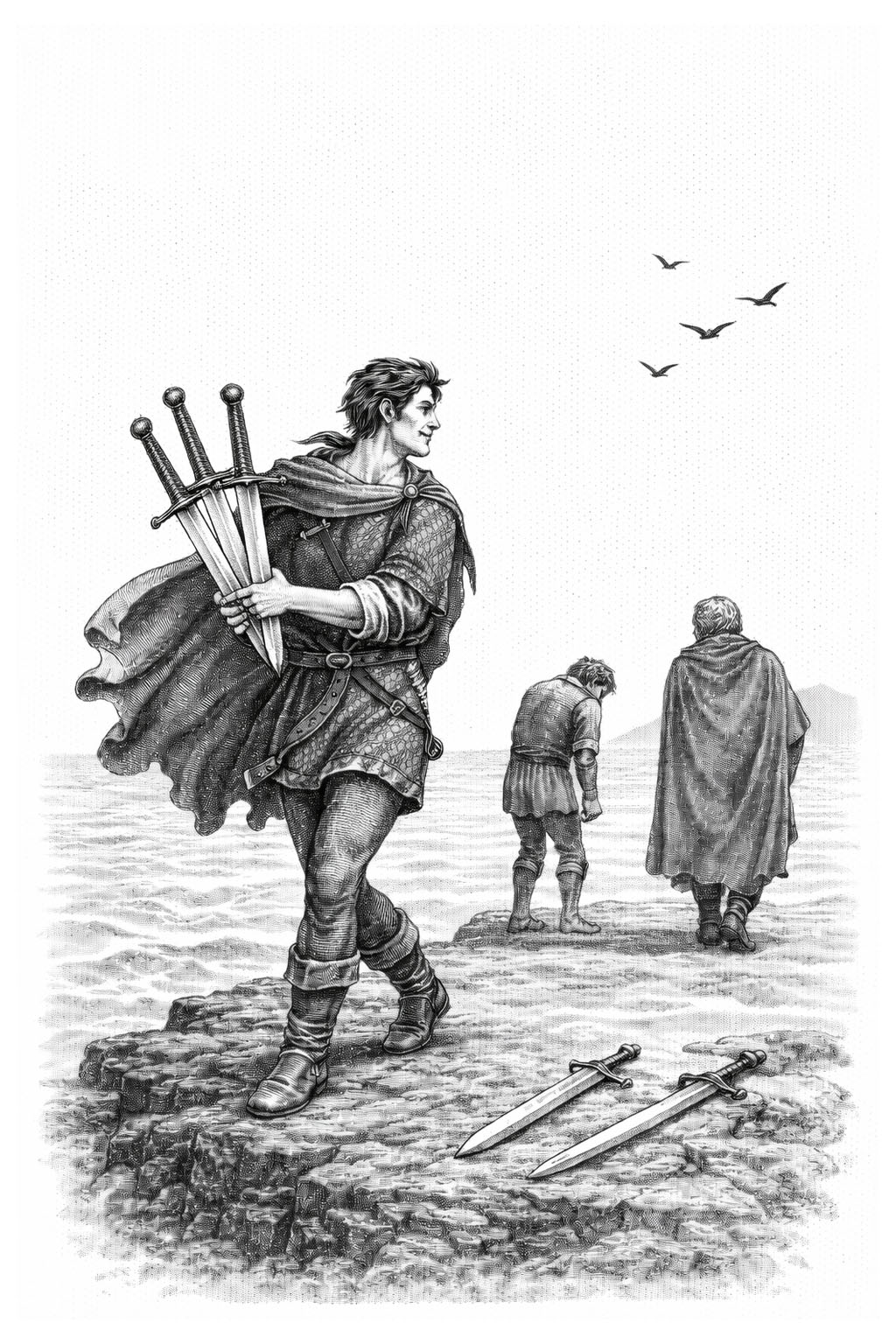
П'ятірка мечів у контексті любовних стосунків вказує на ситуацію конфлікту, напруги або відчуття перемоги ціною втрат. Це карта слів, поранень та інтелектуальних змагань: суперечки можуть бути гострими, а аргументи — більше про те, хто «переміг», ніж про пошук взаєморозуміння. Часто вона сигналізує про нерівні сили, маневрування або пасивно-агресивну поведінку, коли одна зі сторін отримує перевагу, але відносини після цього вже не ті самі.
У любовному прочитанні П'ятірка мечів радить звернути увагу на наслідки способу комунікації та мотивів за конфліктом. Варто аналізувати, чи важливіші для обох правота й контроль, чи збереження поваги та довіри. Карта також підкреслює потребу чесно оцінити, що саме втрачається внаслідок «виграшу»: емоційний контакт, повага або можливість відновлення стосунків. Інакше кажучи, перемога без примирення може виявитися пірровою.
З навчального погляду П'ятірка мечів пропонує розглянути альтернативи боротьбі: переоцінити пріоритети, вчитися брати відповідальність за сказане, уникати принижень і маніпуляцій, а також робити крок назад для оцінки довгострокових наслідків. Карта не дає однозначної оцінки стосунків, але підкреслює необхідність ясності, меж і честності, щоб конфлікт не перетворився на постійне джерело розриву або образ.
Кар'єра та посада
У кар'єрному контексті П'ятірка Мечів зазвичай позначає ситуації конфлікту, суперництва або етичних компромісів на робочому місці. Карта вказує на напругу, коли «перемога» досягається за рахунок інших або шляхом конфронтації, а не через конструктивну співпрацю. Часто це сигнал про короткострокові виграші, які супроводжуються втратами в довірі, репутації або командній динаміці.
Ця карта також підкреслює важливість рефлексії щодо власних мотивів і методів. У професійному середовищі вона нагадує звернути увагу на те, чи не призводить прагнення довести свою правоту до деградації відносин або до ізоляції. Аналізуйте, які наслідки мають ваші дії в середньо- та довгостроковій перспективі: іноді варто переглянути стратегію, віддати пріоритет збереженню репутації й професійних зв’язків над тимчасовою перевагою.
З практичної точки зору карта підказує приділити увагу комунікації, документації рішень і межам відповідальності, а також розглянути альтернативні способи вирішення суперечок — переговори, медіацію або залучення нейтральних осіб. Як навчальний сигнал П'ятірка Мечів наголошує на цінності етичних стандартів у роботі й необхідності балансувати між амбіціями та колективним благом.
Значення фінансів
П'ятірка мечів у фінансовому контексті часто вказує на ситуації, де присутні конфлікт, суперечності інтересів або короткострокові виграші, здобуті за рахунок довгострокової стабільності чи репутації. Карта підкреслює ризик "піруріхової перемоги": коли певна операція дає миттєвий прибуток, але створює ворогів, підриває довіру партнерів чи провокує юридичні ускладнення. Це також попередження про можливі маніпуляції, нечіткі умови угод або агресивну тактику в переговорах, яка може повернутися збитком пізніше.
З аналітичної точки зору карта радить критично переглянути поточні стратегії: оцінити співвідношення вигод і втрат, перевірити документи й договори, фіксувати домовленості і уникати імпульсивних рішень під тиском емоцій. У ситуаціях конфлікту корисно розглядати варіанти поступового виходу або компромісу, зважити репутаційні та юридичні наслідки і залучити фахівців для аналізу ризиків. П'ятірка мечів стимулює навчитися на помилках, формалізувати процедури і робити кроки, що зменшують ризик етичних чи правових проблем у бізнесі.
Значення сім'ї
П'ятірка Мечів у сімейному контексті часто вказує на конфлікти, суперечки або напруження, під час яких одна або кілька сторін намагаються довести свою правоту будь-якою ціною. Це карта, що підкреслює не тільки сам момент сварки, але й наслідки — почуття приниження, образи, ізоляція або «порожня» перемога, коли виграш однієї сторони призводить до втрати довіри та розладу відносин. У сімейних ситуаціях вона також може відображати боротьбу за контроль, нерівні стосунки або незбалансоване прагнення до домінування, коли цілі важливіші за добробут сім'ї.
Аналітично ця карта закликає звернути увагу на мотивацію дій та довгострокові наслідки конфліктів: чи варто заради миттєвої правоти ризикувати теплими стосунками, чи не породжує поведінка «переможця» мовчазного опору або відсторонення. Важливим аспектом є також комунікаційний розлад — непорозуміння, неконструктивні нападки чи уникнення話, які підсилюють напругу.
З практичного, навчального погляду П'ятірка Мечів спонукає до саморефлексії: оцінити, які потреби стоять за агресивною позицією, чи є місце для вибачення або перегляду підходу, і які межі треба встановити, щоб уникнути повторення шкоди. Ускладнення може вимагати втручання третьої нейтральної сторони або тимчасового відходу для охолодження емоцій. Фокус тут на усвідомленому виборі — чи прагнути «виграти» зараз, чи інвестувати у відновлення довіри та довгострокову стійкість сімейних зв'язків.
Психологія та розум
П'ятірка мечів у психологічному вимірі описує стан напруження, моральної двозначності й внутрішнього конфлікту. Людина може відчувати потребу перемогти будь-якою ціною, одночасно усвідомлюючи втрати, які ця «перемога» приносить — почуття провини, осуду або самотності. Характерні риси такого стану: настороженість, оборонна позиція, прагнення довести свою правоту і раціоналізувати агресивну поведінку, інтенсивне переживання поразок або приниження, а також повторювані умови конфронтації, що виснажують психіку.
Цей аркан показує також схильність до румінацій і перегравань минулих суперечок у думках, що підсилює відчуття тривоги і неповноцінності, або навпаки — підкреслює потребу захистити его через приниження інших. У такому стані когнітивні процеси можуть бути скеровані на пошук доказів власної правоти й ігнорування емоційних витрат. Психологічна робота в цьому контексті полягає в розпізнаванні мотивів поведінки, усвідомленні цінності взаємин у порівнянні з короткочасними виграшами, аналізі наслідків конфронтацій для себе й інших, а також у виявленні моделей, що призводять до повторення руйнівних взаємодій.
Значення душі
П'ятірка мечів у контексті душевного стану описує мисленнєвий простір, наповнений конфліктом, оборонністю і напругою. Це образ розуму, який фіксується на суперечках, прагне довести свою правоту навіть ціною стосунків або внутрішнього порозуміння і після «перемоги» відчуває порожнечу або провину. У цьому стані можуть панувати самообґрунтування, підозрілість, образа та схильність до пасивно-агресивної поведінки; мислення стає жорстким, труднощі з гнучкістю і прийняттям компромісів.
Психологічно це також про переживання поразки або приниження — як зовнішнє, так і внутрішнє: внутрішні голоси критикують, виникає відчуття, що інші «проти» тебе, або навпаки — ти стаєш тим, хто завдає болю, щоб захиститися. Аналітично такий стан корисно розглядати через призму мотивацій: що спричиняє потребу в перемозі, які цінності піддаються випробуванню, які наслідки має такий підхід для взаємин і самооцінки. Усвідомлення цих механізмів дає підґрунтя для роботи над емпатією, корекцією комунікації, прийняттям відповідальності за свої реакції та переглядом пріоритетів у конфліктних ситуаціях.