Контекст
Кохання та романтика
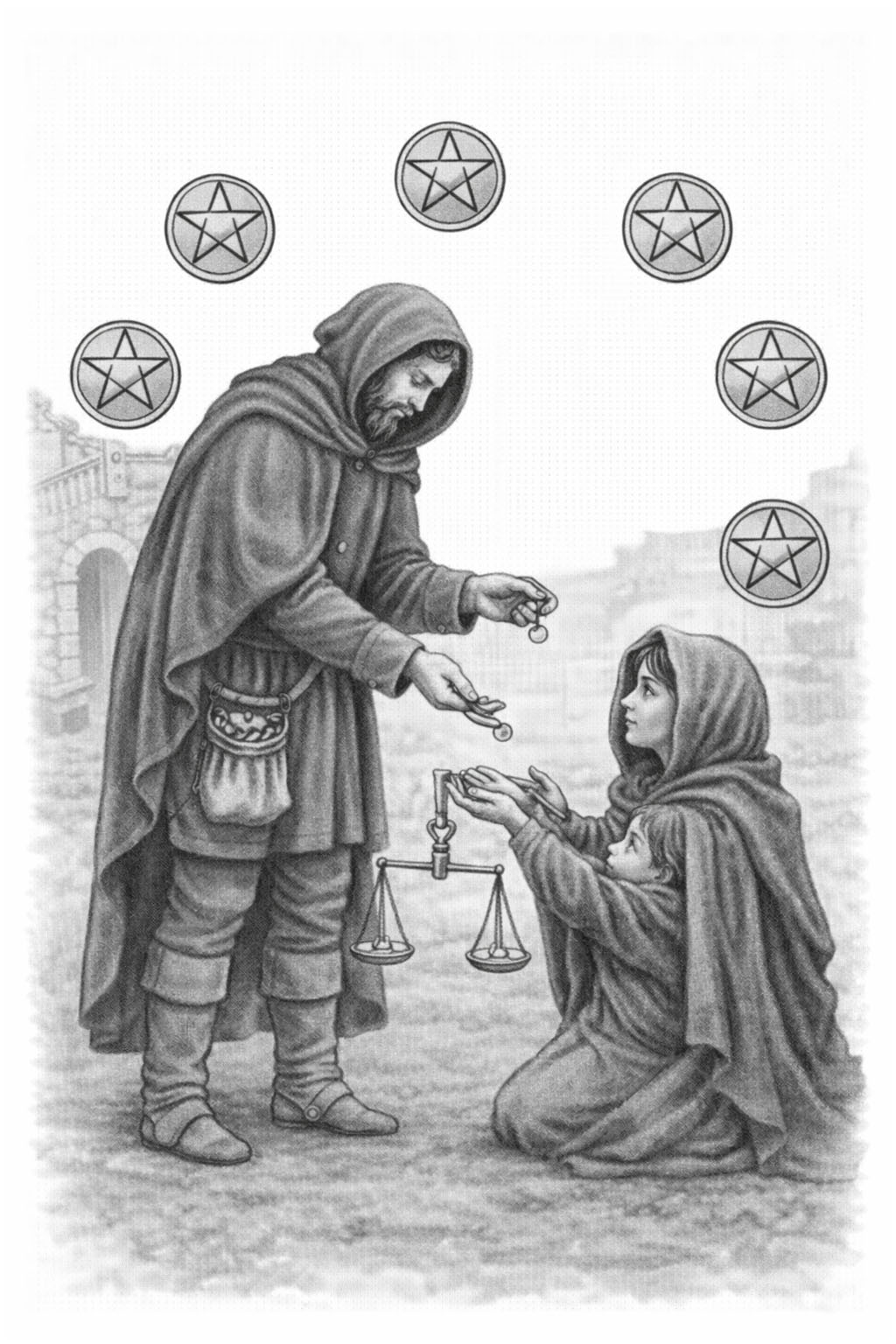
Шістка Пентаклів у контексті любовних відносин описує динаміку обміну — матеріального, емоційного або символічного. У карті часто бачать фігуру, яка роздає монети й ваги, що підкреслює тему рівноваги між тим, хто дає, і тим, хто отримує. Це може свідчити про період, коли один партнер бере на себе більше відповідальності або ресурсів, і про потребу в усвідомленому підході до справедливості й взаємності.
Аналітично, карта підказує звернути увагу на мотиви й умови допомоги. Щедрість може бути доброю базою для зміцнення зв’язку, коли підтримка надається без прагнення керувати або обмінюватися владою. Водночас вона також вказує на ризик залежності, нерівних стосунків або на те, що допомога дається з очікуванням відданості чи контролю. Важливо розрізняти справжню підтримку й співучасть від контролю через матеріальні або емоційні ресурси.
У практичному сенсі Шістка Пентаклів нагадує про потребу узгоджувати питання обміну: фінанси, час, емоційні вкладення. Корисно обговорювати, що кожен партнер вносить у стосунки і чи почуваються обидва поваженими. Якщо хтось часто віддає більше, варто дослідити, чи це усвідомлений вибір, чи виключення власних меж. Якщо хтось частіше приймає, корисно мати навички просити й віддячувати так, щоб зберегти гідність і автономію.
У навчальному ключі карта заохочує розвивати здатність до щедрості, яка ґрунтується на рівності й повазі, а також вміння встановлювати здорові межі, щоб уникати співозалежності. В аналізі стосунків Шістка Пентаклів корисна як інструмент для оцінки балансу давання і отримання, мотивацій і наслідків матеріальної та емоційної підтримки.
Кар'єра та посада
Шістка Пентаклів у кар'єрному контексті говорить про динаміку розподілу ресурсів, винагороди та взаємної допомоги на робочому місці. Образ карти підкреслює активний обмін — фінансову підтримку, підвищення, бонуси, спонсорство або передачу знань і можливостей від того, хто має більше, до того, хто має менше. Вона також акцентує увагу на балансі між даванням і прийманням: щедрість може бути конструктивною, коли вона підкріплена чесними умовами та прозорістю, але може приховувати і нерівні стосунки чи залежність, якщо відсутні чіткі межі.
У робочих ситуаціях карта підказує, що варто проаналізувати, як у команді чи організації розподіляються винагороди та ресурси, наскільки справедливо оцінюється внесок співробітників, і чи є механізми для підтримки тих, хто тимчасово відстає. Вона також вказує на роль наставництва та менторської підтримки: інвестиції в розвиток колег можуть бути стратегічними як для окремих людей, так і для компанії загалом. Водночас корисно звернути увагу на можливі умови "боргу" або приховані зобов'язання, коли допомога супроводжується непрозорими очікуваннями.
Практично це означає перевіряти прозорість політик оплати праці, оформлення матеріальної допомоги чи програм розвитку, узгоджувати очікування та фіксувати домовленості. Для тих, хто отримує підтримку, важливо оцінити її стійкість і можливість повертати або компенсувати вклад у вигляді виконання завдань чи підвищення кваліфікації. Для керівників і колег це нагадування про етичну відповідальність при розподілі ресурсів і про ефективність інвестування в людей як частину професійної стратегії.
Значення фінансів
Шістка Пентаклів у фінансовому контексті символізує динаміку розподілу ресурсів: допомогу, щедрість, взаємний обмін і питання рівноваги між тим, хто дає, і тим, хто отримує. Карта підкреслює важливість справедливих умов при передачі грошей — це може позначати благодійні виплати, позики з наміром підтримки, бонуси або коригування доходів у бік вирівнювання нерівностей. У навчальному плані вона звертає увагу на механізми перерозподілу та на те, як він впливає на стосунки й довгострокову стійкість фінансової ситуації.
Окремо варто розглядати питання мотивів і взаємозалежності: допомога може бути щирою або супроводжуватися умовами й очікуваннями повернення впливу. Аналіз дій за цією картою корисно будувати через оцінку сталості підтримки, формалізації домовленостей, податкових наслідків і ризиків появи залежності. З практичної точки зору вона нагадує про доцільність документування позик, чітких умов повернення та оцінки, чи платформи, фонди або окремі люди, які розподіляють кошти, роблять це в рамках прозорих і справедливих процедур.
У ширшому економічному сенсі Шістка Пентаклів сприяє розумінню, що короткострокова щедрість не завжди вирішує системні проблеми, але може служити інструментом соціальної підтримки й мобілізації ресурсів. Для прийняття зважених рішень корисно поєднувати етичні міркування з аналізом фінансової доцільності і консультаціями фахівців у випадку великих сум або довгострокових зобов’язань.
Значення сім'ї
Шістка Пентаклів у сімейному контексті фокусується на розподілі ресурсів, підтримці та взаємній відповідальності. Символіка карти нагадує про баланс між тим, хто дає, і тим, хто приймає: це може стосуватися фінансів, часу, емоційної уваги або побутового навантаження. У родині вона вказує на ситуації, коли одна людина або група членів систематично допомагає іншим, коли існує добровільна підтримка або навпаки — усвідомлений договір про взаємодопомогу.
Аналітично ця карта підкреслює важливість прозорості та гідності в обміні. Давати і брати можна конструктивно, якщо немає почуття приниження, прихованих умов чи нерівності влади. У сімейних відносинах це означає, що корисно враховувати потреби та можливості кожного, обговорювати очікування щодо фінансової допомоги, догляду за дітьми чи літніми родичами, а також визнавати вклад кожного члена родини — не лише матеріальний, а й нематеріальний.
Практичний аспект Шістки Пентаклів у сім’ї — це робота над довгостроковою стійкістю: створення зрозумілих домовленостей, розподіл обов’язків, навчання фінансовій грамотності та планування, які зменшують ризик залежності або експлуатації. Водночас карта попереджає про можливість патерналістських відносин, де допомога стає інструментом контролю; у таких випадках корисно звертати увагу на межі, повагу до автономії та розвиток взаємності, щоб підтримка залишалася здоровою і справедливою.
Психологія та розум
Пентаклі шість у контексті психологічного стану зазвичай відображають динаміку давання і отримання — внутрішню позицію щодо ресурсів, уваги, підтримки й влади. Карта може вказувати на відчуття ситості або навпаки постійну тривогу через потребу контролювати розподіл того, що є; це також про усвідомлення балансу між щедрістю і самозбереженням. У свідомості присутні мотиви допомоги або, навпаки, залежності: людина може водночас відчувати бажання підтримати інших і переживати провину або вимушеність, коли ця підтримка віддається або отримується.
Психологічно ця карта часто підкреслює питання самооцінки, пов’язані з матеріальною чи емоційною підтримкою: чи сприймається допомога як легітимна потреба, чи як покарання або зобов’язання? Існує також аспект влади й нерівності — відчуття вищості чи приниженості може супроводжувати акти щедрості або приймання допомоги, роблячи обмін умовним. Супровідні емоції можуть включати полегшення, сором, гордість, образу або тривогу через нестабільність обмінних відносин.
Аналітично це запрошення до рефлексії над мотивами та межами: наскільки давання є автентичним, а наскільки — способом отримати контроль або похвалу; наскільки отримання приймається як нормальне, а не як брем’я. Усвідомлення цих механізмів допомагає розпізнати, чи є баланс у стосунках із ресурсами й людьми, чи відбувається хронічне переливання в один бік, що виснажує або принижує.
У терапевтичному або самоаналізному контексті корисним є дослідження внутрішніх переконань про заслуженість, про роль допомоги у самоідентифікації та про вміння встановлювати кордони. Карта заохочує бачити обмін як потенційно взаємовигідну практику, але також відмічає ризики умовності та прихованої влади, які можна опрацьовувати для більш здорових, усвідомлених відносин.
Значення душі
Шістка Пентаклів у контексті душевного стану описує баланс між даванням і отриманням, усвідомлення ролей щедрого та отримувача. Це може бути відчуття стабільності та здатності ділитися ресурсами, або навпаки — переживання через залежність і обов’язок відповідати на чиюсь допомогу. Психологічно така позиція часто супроводжується увагою до справедливості: людина порівнює вклад і винагороду, відчуває потребу відновити рівновагу або впевненість у тому, що взаємини не односторонні. Інша грань цього стану — усвідомлення влади: можливість допомогти дає відчуття контролю, а отримання допомоги може викликати сором або втрату автономії.
Шістка Пентаклів також підкреслює емоційні нюанси мотивацій — чи рухає вас альтруїзм, чи бажання отримати прихильність, чи прагнення зберегти статус? Важливим є розуміння меж: здатність давати не повинна витісняти власні потреби, а приймати допомогу не має перетворюватися на відчуття боргу, що пригнічує. У розумовому плані ця карта стимулює до самоаналізу щодо того, як ви сприймаєте обмін ресурсами — матеріальними, емоційними чи часовими — і чи відчуваєте ви при цьому внутрішню рівновагу. Такий стан запрошує зважити мотиви, прозоро встановити кордони і відпрацювати вміння приймати та віддавати без приниження чи втрати самоповаги.