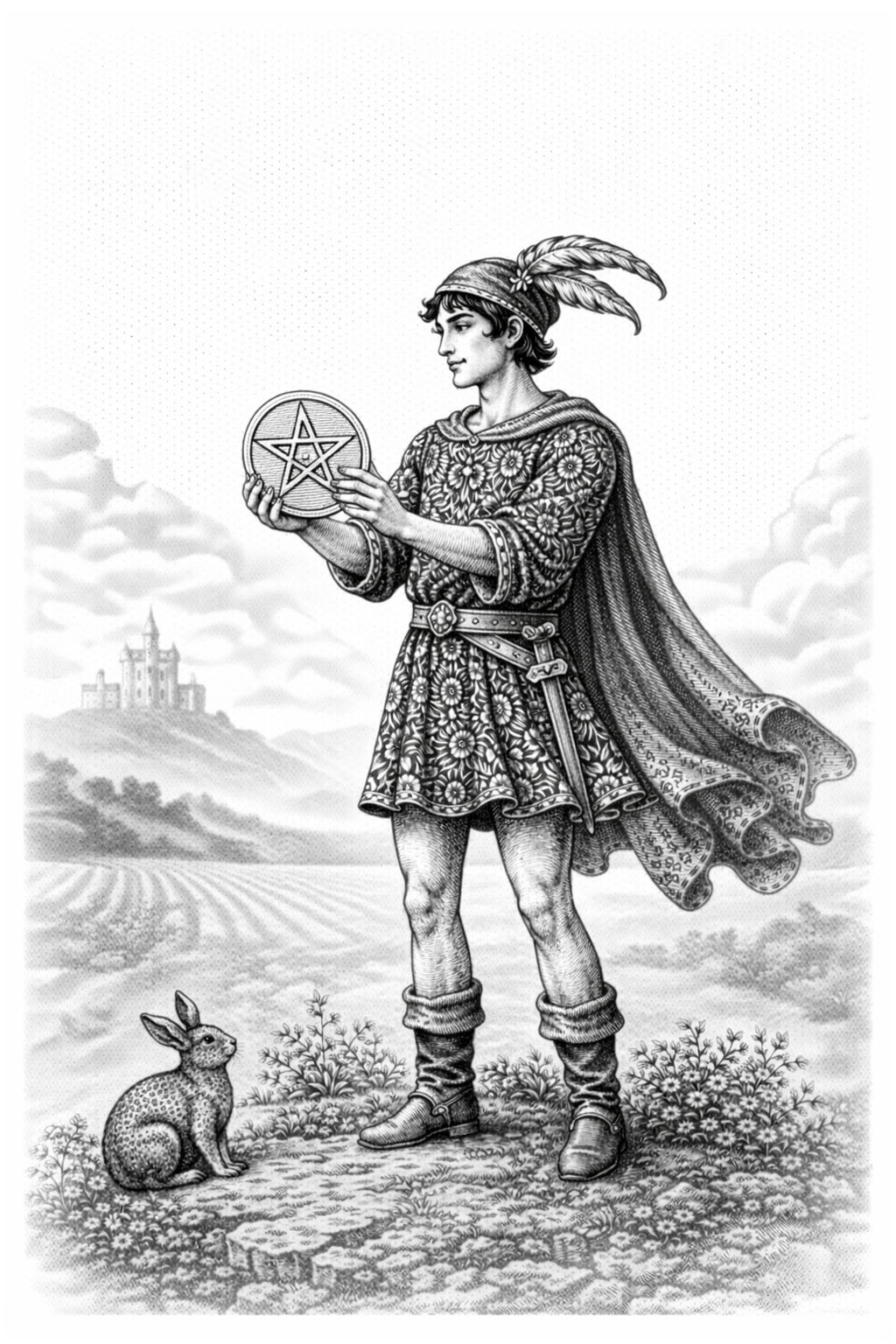
Контекст
Кохання та романтика
Паж Пентаклів у контексті любові найчастіше символізує початок практичного, обдуманого підходу до відносин. Це карта навчання і підготовки: увага до деталей, прагнення створити надійну базу та дослідження того, що дійсно важливо для стабільності зв’язку. У стосунках вона може вказувати на когось, хто демонструє турботу через конкретні дії — допомогу, матеріальну підтримку або планування спільного майбутнього — радше ніж через романтичні жести чи драматичні вираження почуттів.
З навчальної точки зору карта підкреслює цінність терпіння і поступового розвитку: замість поспіху краще аналізувати сумісність у повсякденних питаннях, обговорювати очікування й ролі, перевіряти, чи збігаються цінності та фінансові підходи. Паж також може позначати фазу, коли один або обидва партнери вчаться новим навичкам у відносинах — ефективній комунікації, управлінню ресурсами, встановленню меж.
Водночас освітній аспект карти включає попередження проти надмірної обережності або емоційної закритості: фокусуючись лише на практичності, можна упустити глибші емоційні потреби. Також ризик полягає в тому, що увага до матеріальної сторони може стати важливішою за спонтанність і теплоту.
Як аналітичний орієнтир, Паж Пентаклів заохочує підходити до любовних питань як до проєкту, який вимагає планування, навчання і чесностей у питаннях ресурсів і очікувань, одночасно пам’ятаючи про баланс між практичністю і емоційною відкритістю.
Кар'єра та посада
Паж Пентаклів у контексті кар’єри найчастіше інтерпретується як символ початкового етапу практичного навчання і професійного розвитку. Карта підкреслює увагу до матеріального боку справ, планування й готовність вкладати час у набуття конкретних навичок. Образ пажа відображає молоду, досліджуючу енергію, яка орієнтована на вивчення деталей, тестування методів і збирання інформації, що може закласти основу для стабільного просування.
У професійному середовищі карта вказує на можливість або потребу інвестувати у власну компетенцію: пройти курс, взяти стажування, опанувати нову програму чи технологію. Вона звертає увагу на методичність, терпіння і послідовні, маленькі кроки, які з часом дають практичний результат. Паж Пентаклів також часто асоціюється з відповідальністю в дрібницях, точністю у виконанні завдань і готовністю вчитися від наставників або колег.
Аналітично варто помітити й попереджувальні аспекти цієї карти. Невміння довести почату справу до кінця, розпорошення уваги або надмірний академізм без практичної реалізації можуть стримувати прогрес. Карта нагадує, що знання самі по собі мають цінність тільки за умови застосування: потрібні дисципліна, план дій і систематичне впровадження навичок у робочі процеси.
З практичної точки зору Паж Пентаклів радить фокусуватися на конкретних, досяжних цілях і формувати графік освоєння необхідних компетенцій. Корисно документувати процес навчання, шукати зворотний зв’язок і поступово нарощувати відповідальність у завданнях, щоб отримані знання трансформувалися в ощадливий професійний капітал.
Значення фінансів
Паж Пентаклів у фінансовому контексті символізує початковий етап матеріальних справ, увагу до деталей і прагнення до практичного навчання. Ця карта підкреслює важливість підготовки: збір інформації, складання реалістичного бюджету, дослідження умов договорів і уважна робота з документами. Учасник ситуації зосереджений на конкретних кроках, а не на швидких виграшах.
У значенні кар'єри та доходів Паж Пентаклів часто пов'язують зі стажуванням, навчанням, підвищенням кваліфікації або пробним, початковим проєктом. Це карта, яка радить інвестувати не стільки в ризикові спекуляції, скільки в розвиток навичок і вивчення ринку: невеликі, послідовні вкладення часу й коштів можуть дати стабільну основу для подальшого зростання. У ділових переговорах вона вказує на пропозицію, що вимагає перевірки деталей і терплячого підходу.
Аналізуючи ризики, Паж Пентаклів нагадує про необхідність реалістичних очікувань і уважного документування фінансових кроків. Ситуативна вигода може бути помірною, але корисною як навчальний досвід або як база для довгострокових планів. Карта також акцентує потребу в дисципліні та послідовності: результати приходять не миттєво, а через систематичну роботу й накопичення знань.
Значення сім'ї
Паж Пентаклей у контексті сім’ї символізує практичну, навчальну енергію, що стосується матеріальної сторони життя дому: побуту, фінансів, навчання та побудови стабільності. У класичній символіці паж — це молодий посланець або початок процесу, а пентаклі позначають землю, ресурси та конкретні результати; отже, карта підкреслює увагу до реальних справ, потребу в освоєнні нових навичок і в поступовому, методичному підході до домашніх питань.
У сімейній практиці це може виражатися як початок навчання дітей або молодшого члена родини у сфері фінансової грамотності, впровадження нових побутових звичок, планування бюджету, ремонт або організація домашнього простору. Паж вказує на те, що важливі не великі миттєві зміни, а маленькі, послідовні кроки: збір інформації, навчання, тестування і закріплення навичок. Це також про відкритість до навчання — як дорослих, так і підлітків — та про готовність витрачати час на практичні вправи й пояснення.
У тіньових проявах карта може вказувати на недосвідченість, схильність відкладати важливі справи, надмірну зосередженість на деталях без бачення загальної картини або небажання брати на себе відповідальність. Практичні рекомендації виходять із самої символіки: організувати процес навчання, розбивати завдання на посильні етапи, фіксувати домовленості й ролі, заохочувати практичне вміння через приклад. Такий підхід допомагає перетворити потенціал на конкретні результати і зміцнити матеріальну та побутову основу сім’ї.
Психологія та розум
Паж Пентаклів у контексті психологічного стану описує ставлення, орієнтоване на вивчення, практичність і поступове просування. Це стан, коли увага зосереджена на матеріальних чи навичкових аспектах життя: прагнення освоїти нову вміння, експериментувати з рутинними підходами, обережно перевіряти ідеї на практиці. Ментально присутні цікавість, планування та бажання отримати відчутні результати, але також характерні почуття невпевненості через нестачу досвіду або страх помилки. Емоційно це може бути стримана зацікавленість замість пристрасної імпульсивності, з тенденцією до самоконтролю та обережного оптимізму.
У тіні цього стану виявляються скутість, надмірна педантичність або схильність відкладати дію, захищаючись під виглядом підготовки. Поради для роботи з таким станом включають структурування навчального процесу, розбиття завдань на реалістичні етапи, пошук зворотного звʼязку і створення малих практичних експериментів, які дають швидкий конкретний результат. Важливо поєднати допитливість із терпінням і не ототожнювати власну цінність лише з показниками продуктивності чи матеріальними результатами.
Значення душі
У положенні душевного стану Паж Пентаклів описує енергію навчального початку, практичного інтересу і уважного ставлення до матеріального та фізичного аспектів життя. Це внутрішній настрій, орієнтований на здобуття навичок, планування і повільне, методичне просування вперед; розум працює у режимі спостереження, аналізу і експерименту. Особистість у такому стані стає більш зосередженою, допитливою, готовою вкладати час у підготовку й освоєння конкретних умінь, водночас зберігаючи обережність і прагнення до стабільності.
Емоційно цей стан часто супроводжується почуттям помірної зацікавленості, терпіння і дисципліни, іноді злегка сором’язливою або формальною манерою вираження. Можлива невпевненість через брак досвіду, проте вона має конструктивний характер — як мотивація вчитися й накопичувати ресурси. З тіньових аспектів може проявлятися надмірна обережність, схильність відкладати ризики або зосередженість виключно на практичних вигодах замість ширшого сенсу.
У контексті внутрішнього життя образ підкреслює вміння розбивати великі завдання на реалістичні кроки, цінність рутинних дій і навчання через практику. Це корисний стан для закладення фундаменту — розвитку компетенцій, фінансового планування або фізичної реабілітації — коли важливі стабільність, послідовність і прагматичний підхід.