Контекст
Кохання та романтика
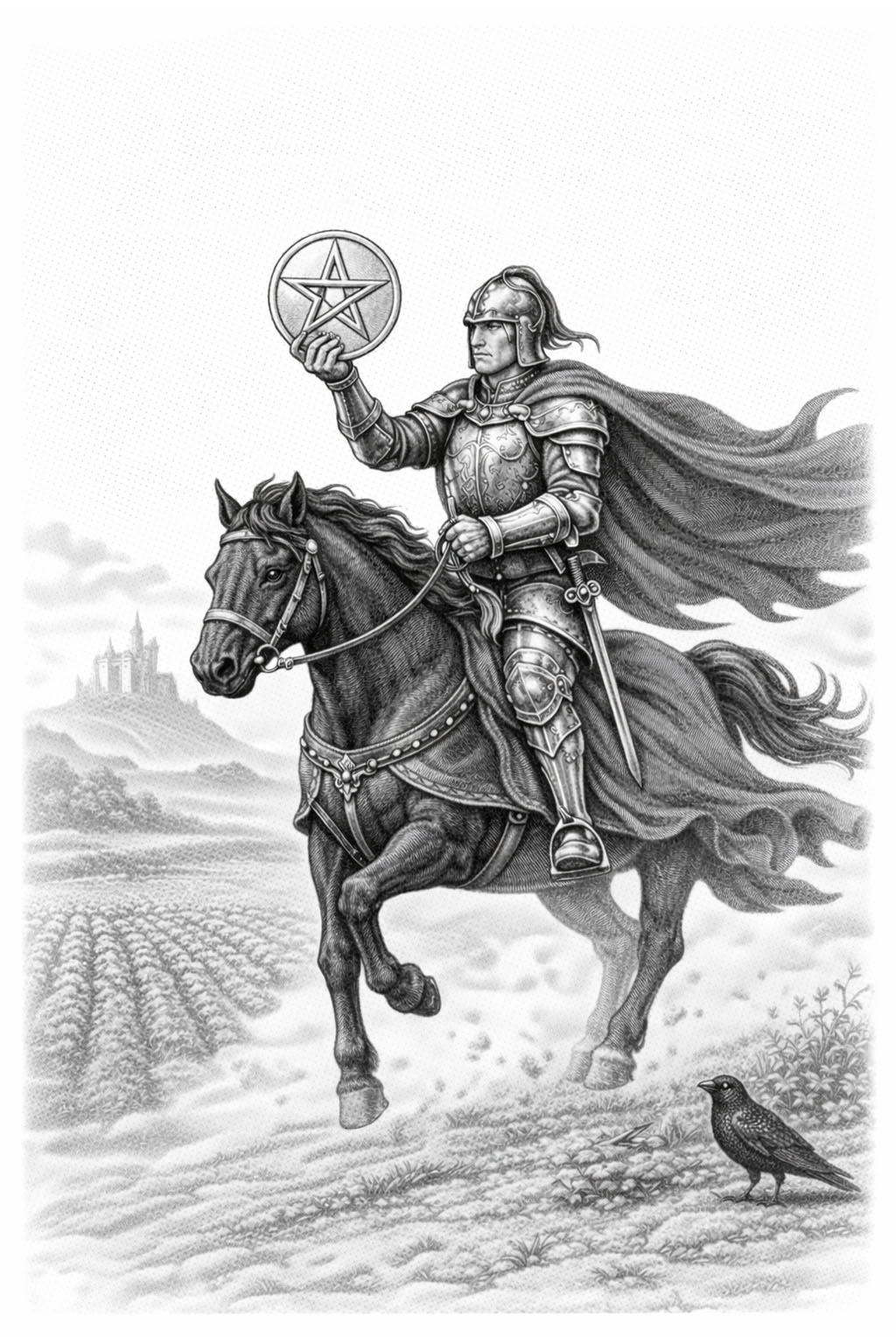
Лицар Пентаклів у контексті любові характеризується практичністю, надійністю та поступовим підходом до почуттів. Ця карта вказує на партнерів або динаміку стосунків, де цінується стабільність, відповідальність і довготривале планування. Прояви уваги найчастіше матеріальні або утилітарні — допомога в побуті, виконання обіцянок, продумане вкладення часу й ресурсів у спільне життя. Емоції можуть виражатися стримано: прихильність показують через дії й регулярність, а не великі романтичні жести.
У робочих над стосунками аспектах ця карта підкреслює важливість терпіння, поступового нарощування довіри і послідовної праці над взаєминами. Водночас Лицар Пентаклів може сигналізувати про ризики застою або рутинності: надмірна фокусованість на безпеці й практичних питаннях іноді стримує спонтанність і глибший емоційний зв’язок. Також характерна обережність у виявленні почуттів і певна упертість у вибраних підходах.
З практичної точки зору, у любовних ситуаціях карта заохочує цінувати сталість і помічати дрібні, але постійні вкладаючі в стосунки дії. Одночасно корисно бути уважними до сигналів про застій: якщо відчутна одноманітність або емоційний холод, варто працювати над відкритішою комунікацією і вводити елементи новизни. Карта не визначає долю, а описує стиль взаємодії й області, на які варто звернути увагу при будуванні або підтриманні стосунків.
Кар'єра та посада
В кар’єрному контексті Рицар Пентаклів уособлює наполегливу, практичну і відповідальну підхід до роботи. Цей архетип вказує на фокус на деталях, методичну роботу, систематичне виконання обов’язків і орієнтацію на тривалі результати. У проєктній діяльності та повсякденних завданнях проявляється прагнення довести справу до кінця, ретельно планувати кроки і дотримуватися встановлених процедур.
Такий підхід буває дуже корисним для завдань, що вимагають точності, стабільності та дисципліни: ведення документації, фінансовий контроль, технічна реалізація, рутинні операції. Рицар Пентаклів часто пов’язаний із працівником чи керівником, який цінує надійність і передбачуваність, готовий виконувати важку, іноді нудну роботу, щоб досягти довгострокових цілей. Він також підкреслює відповідальність перед колективом і готовність вкладати час у поступове підвищення якості результату.
Водночас карта вказує на потенційні обмеження: надмірна обережність, консерватизм, опір новим підходам або схильність до перфекціонізму можуть уповільнювати прогрес і блокувати інновації. Іноді це проявляється як рутинність, яка може перетворитися на застій, або як небажання делегувати і ризикувати для масштабування результатів.
Практичний підхід до роботи й увага до деталей — перевага Рицаря Пентаклів, але для ефективної кар’єри корисно поєднувати цю дисципліну з гнучкістю, комунікацією і готовністю переосмислювати процеси. Фокус на реалістичному плануванні, системному виконанні завдань і встановленні досяжних етапів допомагає максимально використовувати сильні сторони цієї карти, мінімізуючи ризики застою.
Значення фінансів
Рицар Пентаклів у фінансовому контексті являє собою образ практичності, дисципліни та послідовної праці. Ця карта підкреслює важливість системного підходу до грошей: регулярного ведення обліку, планування бюджетів, акуратного виконання зобов’язань і поступового накопичення ресурсів. Вона вказує на перевагу надійних, консервативних рішень перед швидкими ризикованими кроками — спрямованість на стабільний, хоч і повільний, приріст капіталу.
Аналітично це означає увагу до деталей: ретельна перевірка умов кредитів і інвестицій, оцінка грошових потоків та резервів, дисципліновані щомісячні внески або відкладення. Рицар Пентаклів також асоціюється з трудовою етикою і відповідальністю щодо джерел доходу: сталі доходи від праці чи бізнесу, регулярна робота над підвищенням ефективності процесів і зниженням витрат. У фінансовому менеджменті це карта системних процедур, надійних контрактів і довгострокових планів.
Тіньовий аспект карти проявляється як надмірна обережність, інерція або консерватизм, які можуть блокувати зростання. Занадто сильний фокус на безпеці іноді призводить до пропущених можливостей або до рутини, що гальмує адаптацію до змін ринку. Тому при інтерпретації цієї карти важливо балансувати між дисципліною та гнучкістю: оцінювати ризики ретельно, але залишатися відкритим до помірних інновацій і періодичної переоцінки стратегії.
Освітньо направлена інтерпретація Рицаря Пентаклів у фінансах акцентує на створенні стабільної системи управління фінансами — чіткі процедури, резервні фонди, регулярний моніторинг і довгострокові цілі — при збереженні готовності коригувати план у відповідь на нові дані або змінене середовище.
Значення сім'ї
Рицар Пентаклів у контексті сім’ї подає образ практичності, послідовності та відповідальності. Це карта, що підкреслює важливість рутини, догляду за матеріальними аспектами життя та систематичного підходу до побутових і фінансових питань. У читанні вона описує не стільки емоційні вибухи, скільки стабільну, повільну працю над забезпеченням домашнього комфорту й довгостроковою безпекою.
У сімейних відносинах прояви цієї карти часто пов’язані з людиною, яка бере на себе практичні обов’язки: планує бюджет, організовує ремонт, слідкує за щоденними справами і дотримується розкладу. Це може бути корисно для створення міцної основи, але одночасно підкреслює необхідність терпіння і послідовності — зміни відбуваються поволі й за планом, а не імпульсивно.
Аналітично важливо також зауважити тіньовий бік архетипу: надмірна рутинність, консерватизм або фокус лише на практичних питаннях можуть знижувати емоційну відкритість і гнучкість у відносинах. У навчальному ключі карта рекомендує оцінити, наскільки сімейні ролі і розподіл обов’язків відповідають потребам усіх членів, чи немає перевантаження одного з партнерів, і чи забезпечує існуюча структура достатньо простору для спонтанності й емоційного обміну.
Психологія та розум
Рицар пентаклів у контексті психологічного стану позначає схильність до практичного, методичного та відповідального мислення. Це образ внутрішньої дисципліни, коли увага спрямована на планування, виконання рутинних завдань і забезпечення стабільності. Психологічно це може проявлятися як відчуття контролю через порядок і системність, впевненість у власній працездатності та готовність терпляче докладати зусиль для досягнення результатів.
Водночас така установка несе й обмеження: підвищена обережність може переростати в консерватизм, ригідність або страх перед ризиком і невизначеністю. Емоції можуть відходити на другий план заради обов’язку, а прагнення до ідеального виконання — породжувати тривогу або емоційне вигорання. Рицар пентаклів часто характеризується повільною, але стійкою дією; це дає надійність, проте знижує гнучкість у випадках, коли потрібні інновації чи швидкі зміни.
З точки зору самопізнання корисно розглядати, які ресурси забезпечують почуття безпеки й наскільки рутина допомагає або заважає життю. Аналіз відповідальностей, меж і пріоритетів може виявити, де дисципліна служить благу, а де перетворюється на тиск. Практики балансування — наприклад, дозвіл на невеликі експерименти, увага до фізичного відпочинку і емоційних потреб — можуть пом’якшити ригідність без втрати ефективності.
У підсумку Рицар пентаклів як психологічний стан — це стабільна, працьовита і обережна позиція, що приносить надійність і продуктивність, але вимагає усвідомлення ризику застою і надмірної самодисципліни.
Значення душі
Лицар Пентаклів описує душевний стан, зорієнтований на практичність, стабільність і поступовий поступ. Мислення стає методичним: увага до деталей, прагнення до планування і виконання завдань один за одним переважають над імпульсивними рішеннями чи раптовими ідеями. Це стан, у якому важливі відповідальність, надійність і контроль над ресурсами — як матеріальними, так і емоційними.
Емоційно він характеризується стриманістю й поміркованістю. Почуття безпеки та впевненість у власних кроках можуть зростати, але разом із тим виникає схильність до ригідності, перебільшеного перфекціонізму чи уникання ризику. Думки можуть застрягати в рутині: комфорт у відпрацьованих схемах змінює інтерес до експериментів і творчих відхилень.
На когнітивному рівні такий стан сприяє концентрації й наполегливій праці: проєкти просуваються повільно, але стабільно. Водночас можливі симптоми застою — відчуття монотонності, втома від одноманітності або неспроможність бачити ширшу перспективу через фокус на деталях. Соціально це проявляється як обережність у стосунках і схильність триматися перевірених ролей.
Аналітично корисно розглядати цей стан як ресурс дисципліни й організованості, а також як сигнал перевірити, чи не перетворилася обережність на закритість. Усвідомлення переваг і меж Лицаря Пентаклів допомагає збалансувати прагнення до надійності з потребою гнучкості й відновлення емоційного тонусу.