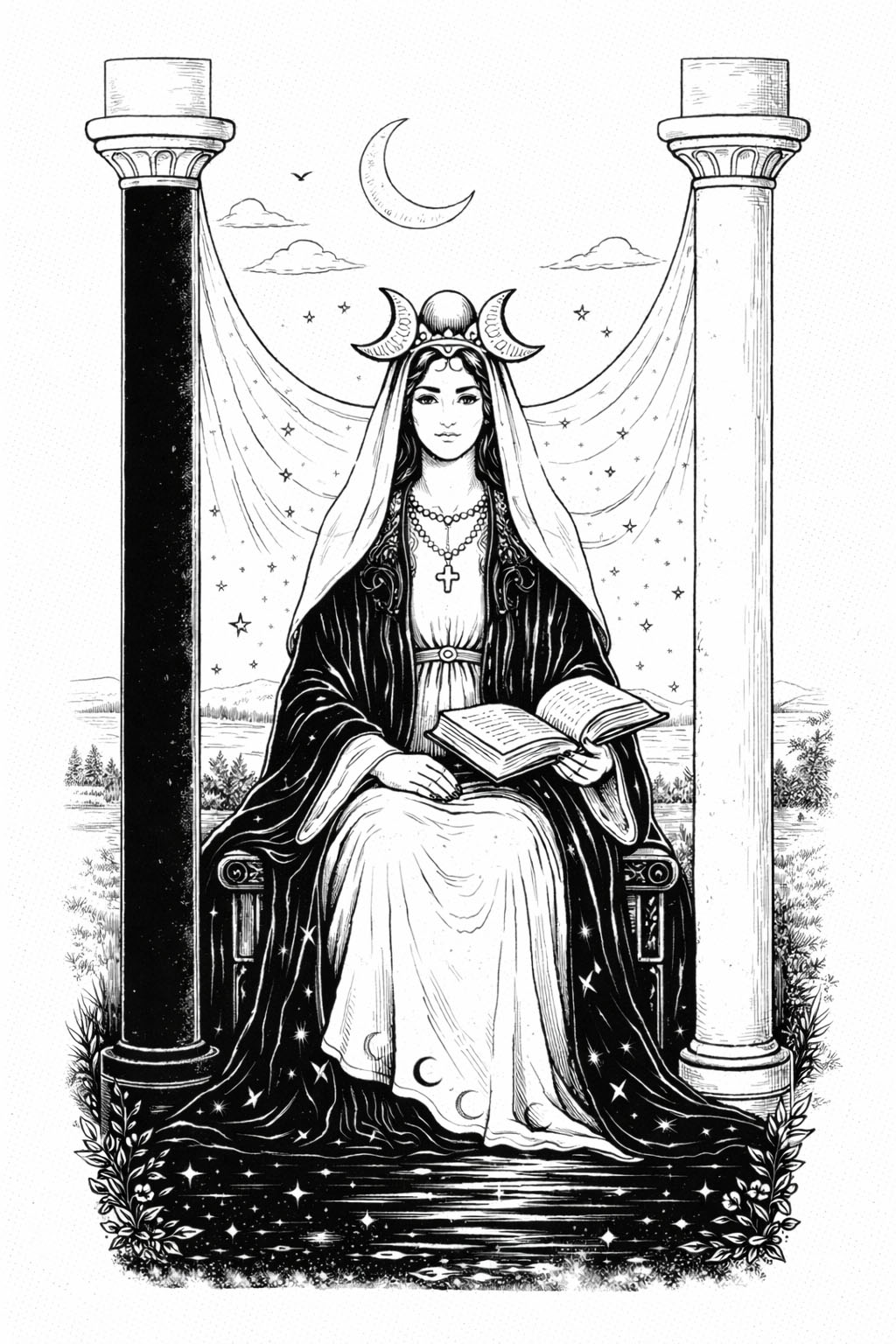
Контекст
Кохання та романтика
В контексті любовних відносин Верховна Жриця означає акцент на внутрішньому пізнанні, інтуїції та невисловлених шарах емоційного зв’язку. Карта вказує на присутність підсвідомих струмів — почуттів, мотивів або страхів, які формують поведінку партнерів, але залишаються прихованими на свідомому рівні. Це може проявлятися як глибока емоційна інтимність, що не потребує слів, або як завод похмурої таємничості, коли одна чи обидві сторони тримають дистанцію.
Трактування цієї карти в любові служить нагадуванням про важливість слухання власної інтуїції і уважного спостереження за невербальними сигналами. Замість поспішних висновків або активних дій, карта заохочує заглибитися в себе, вивчити мотивації та минулі моделі, що впливають на стосунки. Мовчання і терпіння можуть розкривати більше, ніж вимушена активність, але варто також бути обережним із надмірною закритістю: невисловлені слова й таємниці здатні створити відчуження.
У тіньових проявах карта вказує на пригнічені емоції, приховані наміри або емоційну холодність, які блокують розвиток зв’язку. Практики саморефлексії, робота з підсвідомістю, уважне й делікатне встановлення меж можуть допомогти інтегрувати енергію Жриці конструктивно. У навчальному, аналітичному ключі карта нагадує: глибинне розуміння себе й партнера, терпіння і здатність помічати несказані сигнали часто важливіші за негайну реакцію чи перевірку фактів.
Кар'єра та посада
У професійному контексті карта Верховна Жриця акцентує увагу на внутрішньому знанні, інтуїції та інформації, що не завжди очевидна на поверхні. Вона вказує на період, коли важливіше працювати з усвідомленням, слухати підсвідомі сигнали, аналізувати приховані фактори й уважно спостерігати за динамікою в колективі або проєкті, ніж робити імпульсивні кроки. Ця карта часто асоціюється з роботою «за лаштунками», дослідженням, аналізом даних, підготовкою, навчанням і накопиченням експертизи, а також із ролями, де потрібна делікатність, дискреція і вміння зберігати конфіденційність.
У значенні кар’єри Верховна Жриця може сигналізувати про наявність важливої, але прихованої інформації або про необхідність почекати з відкритими діями, щоб з’ясувати повну картину. Вона нагадує про важливість балансу між раціональним аналізом і інтуїтивним чуттям: рішення, що спираються на глибше розуміння контексту, часто виявляються стійкішими. Також карта підкреслює роль внутрішньої підготовки — наприклад, самостійного навчання, створення концептуальної бази або налагодження мережі контактів поза публічним увагою.
Аналітично корисно розглядати карту як запрошення зібрати додаткові дані, перевірити джерела, звернути увагу на мовчазні сигнали та інтуїтивні підказки, а не як інструкцію до негайної дії. У професійному тлумаченні вона також може вказувати на потребу в емоційних межах та професійній стриманості при взаємодії з колегами й керівництвом.
Значення фінансів
Верховна Жриця у фінансовому контексті репрезентує приховані фактори, інтуїцію та необхідність внутрішньої уважності. Ця карта не дає прямої вказівки діяти, вона радше підкреслює, що важлива інформація може бути непомітною або доступною лише після ретельного аналізу і роздумів. У практичному вимірі це може означати наявність нерозкритих зобов’язань, умов у контрактах, секретних джерел доходу або даних, які впливають на фінансове становище, але поки що не озвучені.
Верховна Жриця також асоціюється з накопиченням знань і інвестиціями в освіту, що дають відкладені, стабільні вигоди більше у довгостроковій перспективі, ніж миттєвий прибуток. Вона вказує на користь повільного, уважного підходу: перевірка документів, вивчення деталей, консультації з фахівцями і критичне ставлення до привабливих, але непрозорих пропозицій. Карта нагадує про роль інтуїції як додаткового інструмента аналізу — іноді внутрішнє відчуття підказує звернути увагу на те, що не видно у звітності.
У комерційних чи партнерських відносинах Верховна Жриця може позначати нерівномірний розподіл інформації або необхідність конфіденційності, а також ситуації, що потребують юридичної перевірки. Загалом, у фінансах її значення фокусується на обачності, глибинному розумінні обставин і наданні переваги прозорості та знанню над імпульсивними діями.
Значення сім'ї
Верховна Жриця у розкладі, який стосується сім’ї, виступає як символ внутрішнього знання, невисловлених емоцій і прихованих динамік. Вона підкреслює значущість інтуїції, уважного слухання і розпізнавання того, що залишається поза словами: давні сімейні наративи, табу, несвідомі патерни або інформація, яка передається через невербальні сигнали. У практичному сенсі карта нагадує про потребу створити простір для тиші й рефлексії, де люди можуть поступово відкривати почуття й історії, а не вимагати негайних пояснень.
Верховна Жриця також пов’язана з архетипом матері або опікунки, яка тримає кордони і захищає приватність; це може означати, що в родині присутня людина, яка зберігає спокій і стабільність завдяки внутрішній мудрості, або натяк на роль, яку відіграють жіночі лінії й традиції. Інша сторона карти — схильність до мовчазного відсторонення або таємничості: проблеми можуть замовчуватися, що ускладнює вирішення конфліктів, якщо не працювати над тим, щоб безпечніше ділитися інформацією.
З освітньої точки зору карта радить вивчати сімейну історію, звертати увагу на підсвідомі сигнали, практикувати співчутливе слухання і створювати моменти для відкритих, але ненасильницьких розмов. Також варто бути уважним до балансу між захистом приватності і необхідністю чесності: надмірна закритість може підтримувати шаблони, які повторюються з покоління в покоління. У випадку потреби робота з фахівцем, спільні ритуали або ведення сімейного наративу можуть допомогти вивести на світло важливі теми без тиску й осуду.
Психологія та розум
Верховна Жриця у контексті психологічного стану описує тенденцію до внутрішньої зосередженості, інтуїтивного сприйняття і прихованого знання. Це образ людини, яка більше слухає ніж говорить, орієнтована на підсвідомі сигнали, символи снів і внутрішні відчуття. Переважно домінують рефлексія, терпеливе спостереження та здатність витримувати невизначеність без негайного прагнення до дій або пояснень.
Психологічно карта вказує на підвищену чутливість до внутрішніх процесів: емоції можуть бути пригнічені або зашифровані в образах і асоціаціях, свідомість працює крізь символи, інтуїція переважає раціональний аналіз. Такий стан сприяє глибокому самоусвідомленню й відкриттю підсвідомих матеріалів, але одночасно пов’язаний із ризиком відстороненості, емоційної ізоляції або уникання контактів через побоювання розкриття особистого простору.
З аналітичної точки зору, присутність цього архетипу сигналізує про період накопичення внутрішнього досвіду й необхідність інтеграції неусвідомленого. Практики, що фокусуються на розпізнаванні символіки снів, веденні щоденника внутрішніх відчуттів, медитативних чи терапевтичних методах, можуть допомогти поступовій артикуляції того, що наразі приховано. Водночас важливо звертати увагу на межу між корисною рефлексією і тривалою відстороненістю: якщо мовчання перетворюється на заперечення потреби у взаємодії або на уникнення емоційної роботи, це потребуватиме свідомого включення соціальної підтримки або більш активних інтеграційних стратегій.
Значення душі
Верховна жриця у контексті душевного стану описує стан підвищеної внутрішньої уваги до несвідомого, інтуїції й внутрішніх образів. Це не про активні вчинки чи зовнішні зміни, а про здатність слухати тихі сигнали душі, помічати символи снів і внутрішні відчуття, а також утримувати кордон між тим, що відомо свідомо, і тим, що приховано. Психологічно карта вказує на період рефлексії, потребу в тиші й самопізнанні: думки можуть стати глибшими, сприйняття — більш чутливим до нюансів.
Водночас енергія карти несе ризик надмірної пасивності або емоційної ізоляції, коли внутрішня робота перетворюється на відсторонення від життя і людей. Корисно розрізняти інтуїтивні підказки й уникнення рішень; інтеграція відчуттів і логіки допомагає збалансувати цю фазу. Практики самоспостереження — медитація, ведення сновидінь чи щоденника асоціацій, робота з уявою — можуть сприяти усвідомленню внутрішніх процесів; при інтенсивних переживаннях або відчутті ізоляції доречна підтримка фахівця. Загалом, карта описує запрошення заглибитися в себе, вивчити власні джерела знання й почуттів, не поспішаючи робити зовнішні висновки.