Контекст
Кохання та романтика
Місяць у контексті любові вказує на сферу неусвідомленого, напівпрозорих меж і змінних емоцій. Символіка карти нагадує, що почуття інколи освітлюються лише фрагментарно, а частини ситуації залишаються в тіні: страхи, давні емоційні програми, несвідомі бажання та проєкції можуть спотворювати сприйняття партнера й взаємин. Місяць підкреслює роль інтуїції й уяви — вони корисні для розуміння внутрішніх процесів, але не завжди дають точну картину зовнішніх реалій.
З аналітичної точки зору карта закликає звернути увагу на непроговорені теми, двозначності в поведінці та можливі таємниці або інформацію, що приховується через страх чи сором. Вона також вказує на циклічність емоцій: періоди сумніву й невизначеності можуть змінюватися ясністю й безпекою, тому поспішні висновки можуть виявитися помилковими. У взаєминах це може проявлятися як привабливість містики й невідомого, що одночасно зворушує й дезорієнтує.
Практично це означає потребу в усвідомленні власних реакцій і перевірці фактів: запитати себе, які побоювання чи надії походять із минулого, що ви проєктуєте на партнера, які сигнали залишаються непоміченими. Важливі ясні, відкриті розмови, уважність до поведінки й конкретних вчинків, а не лише до слів чи уявлень. Корисні інструменти — ведення записів емоцій, проговорення кордонів, робота з психологом або практика сновидінь для розбору символів. Місяць не дає однозначних вироків; вона надає карту тем, які варто дослідити глибше, щоб перейти від ілюзій до більшої ясності й зрілого вибору в любовних питаннях.
Кар'єра та посада
Карта Місяць у кар'єрному контексті символізує неясність, підсвідомі впливи і ситуації, що приховують відразу кілька важливих деталей. Вона вказує на період, коли інформація неповна або спотворена, коли рішення визивають сумніви через страхи, проєкції або чутки, а не через об'єктивну оцінку реальності. На робочому місці це може проявлятися як туманне керівництво, неузгоджені інструкції, секретність у відносинах з колегами або невизначеність щодо ролей і очікувань.
Місяць також підкреслює роль інтуїції і творчого бачення: у ситуаціях невизначеності корисно відокремлювати інтуїтивні відчуття від страхів і автоматичних реакцій. Карта радить звернути увагу на внутрішні мотиви, на те, які підсвідомі установки можуть підштовхувати до поспішних рішень або уникання відповідальності. Одночасно вона попереджає про можливі маніпуляції, неперевірені чутки та приховані наміри інших учасників процесу.
Практичний підхід в таких умовах — систематичний збір фактів, документування домовленостей і уточнення очікувань, пошук зовнішніх думок або супервізії для зменшення впливу емоційних викривлень. Для творчих професій Місяць може означати продуктивний період інтуїтивних ідей, проте ці ідеї потребують перевірки і структурування, щоби стати реалізованими проєктами. У підсумку карта заохочує робити паузи для аналізу, бути уважним до прихованих факторів і розвивати інструменти, що знижують невизначеність у професійному житті.
Значення фінансів
Місяць у фінансовому контексті символізує невизначеність, приховану інформацію і сприйняття, що може вводити в оману. Ця карта вказує на те, що ситуація навколо грошей може бути нестабільною або недостатньо прозорою: існують невідомі фактори, приховані витрати, неповні дані або емоційні упередження, які впливають на оцінку ризиків.
Аналітично це означає необхідність ретельної перевірки джерел інформації, уважного вивчення контрактів і пошуку ясності в умовах платежів і зобов’язань. Місяць також підкреслює, що емоції, страхи або оптимістичні уявлення можуть викривляти фінансові рішення, тому корисно відокремлювати інтуїцію від фактів і співставляти відчуття з конкретними даними.
У практичному вимірі карта часто асоціюється з волатильністю доходів, затримками в платежах, можливими помилками в розрахунках або ризиком шахрайства й неправильної інтерпретації пропозицій. Водночас вона не виключає потенційних можливостей, особливо пов’язаних із творчими чи нестандартними джерелами доходу, але підкреслює потребу в системному підході й підготовленості до коливань.
З навчальної точки зору Місяць радить приділяти більше уваги перевірці фактів, консультаціям фахівців і прозорості в комунікації, щоб мінімізувати невизначеність і приймати зважені, інформаційно підкріплені рішення.
Значення сім'ї
Карта Місяць у контексті сім’ї позначає складні емоційні підводні течії, невизначеність і те, що не завжди видно на поверхні. Вона вказує на ситуації, у яких домінують сумніви, страхи, нерозкриті почуття або приховані мотивації членів родини. Часто це свідчить про непорозуміння, нечітку або двозначну комунікацію, мовчання щодо важливих тем або старі сімейні історії, які впливають на теперішні відносини без явного усвідомлення.
Аналітично це запрошення звернути увагу на джерела тривоги: які припущення й упередження лежать в основі конфліктів, які теми витіснені і потребують обережного проговорення. Місяць також підкреслює роль інтуїції і снів як джерел інформації про незавершені емоційні питання; аналогічно рекомендується збирати факти, перевіряти припущення і уникати поспішних висновків на основі страху або чуток.
У практичній площині це означає створення безпечного простору для відвертої, терпимої розмови, уважне слухання і бажання розпізнати проєкції та сімейні патерни. За потреби корисною може бути допомога фахівця для роботи з глибинними емоціями або для розкриття довготривалих травм. Загалом Місяць у сімейному контексті вчить помічати тонкі сигнали, досліджувати невизначеність і працювати над прозорістю та емоційною чесністю, а не дозволяти страхам керувати відносинами.
Психологія та розум
Карта Місяця у контексті психологічного стану вказує на домінування підсвідомих процесів, нечітких меж між реальністю й уявою та підвищену чутливість до внутрішніх образів і страхів. Це стан, коли думки і емоції можуть бути сприйняті як туман: інформація фрагментарна, логіка ослаблена, виникають сумніви, підозрілість або ірраціональні побоювання. У такому стані легко проектувати власні тривоги на зовнішній світ, переоцінювати загрози або, навпаки, ігнорувати очевидні факти через емоційне забарвлення.
Позитивний аспект цієї карти — посилене сприйняття символів, мрій, творчого натхнення й інтуїції. Місяць підкреслює, що частина інформації приходить з глибини психіки й може відкривати невідпрояснені переживання, старі травми або приховані потреби. Водночас вона попереджає про ілюзії, самообман і маніпуляції — як із боку зовнішнього середовища, так і власні захисні стратегії, які спотворюють реальність.
Практично це означає потребу в уважному, методичному підході до власного внутрішнього життя: документувати сни й повторювані образи, помічати умовні тригери емоційних спалахів, фільтрувати інформацію через перевірку фактів і звертати увагу на тілесні відчуття. Корисними можуть бути техніки заземлення, спостереження за думками без імпульсивних висновків, а також робота з фахівцем, якщо стан супроводжується інтенсивною тривогою чи порушенням повсякденної функціональності. Місяць не пропонує однозначних рішень, натомість вказує на область внутрішньої роботи й дослідження, де важливо поєднати чутливість і критичне мислення.
Значення душі
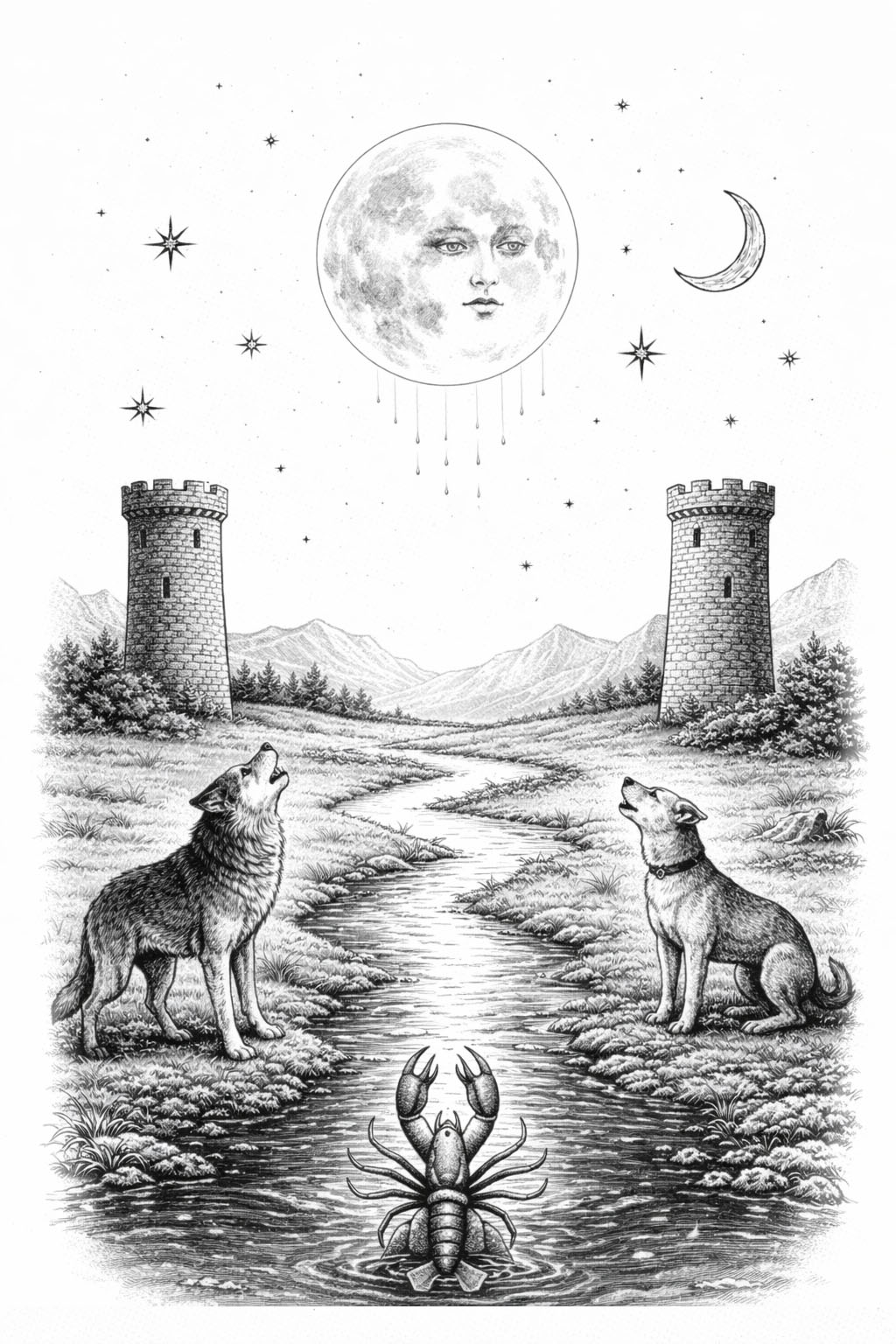
Місяць у контексті душевного стану описує період, коли внутрішній світ домінує над ясністю зовнішніх обставин: підсвідоме, несвідомі страхи, сновидіння та уявні образи виходять на передній план. Символи карти — місячне світло, що кидає тіні, дві тварини по краях і ракоподібне, що поволі вилізає з води, — підкреслюють розмитість кордонів між реальністю й уявою, а також поступове виникнення захованих емоцій. Це може проявлятися як тривога, невпевненість, підвищена чутливість або схильність до ілюзій і самообману, але також як багатий творчий потенціал і посилена інтуїя.
Аналітично розглянута, карта вказує на необхідність уважно досліджувати те, що спливає з несвідомого: звертати увагу на сни, образи, повторні теми думок і емоційні реакції, щоб відділити конструктивні інсайти від фальшивих сценаріїв. Практики, які допомагають розрізняти фантазію й факти — ведення щоденника, робота зі сновидіннями, психологічна підтримка, техніки заземлення й усвідомленого дихання — можуть полегшити навігацію цим станом. Висновок не має прогностичного характеру: Місяць відображає процеси внутрішнього очищення й конфронтації з тінню, який потребує часу, терпіння й критичного ставлення до власних інтерпретацій.