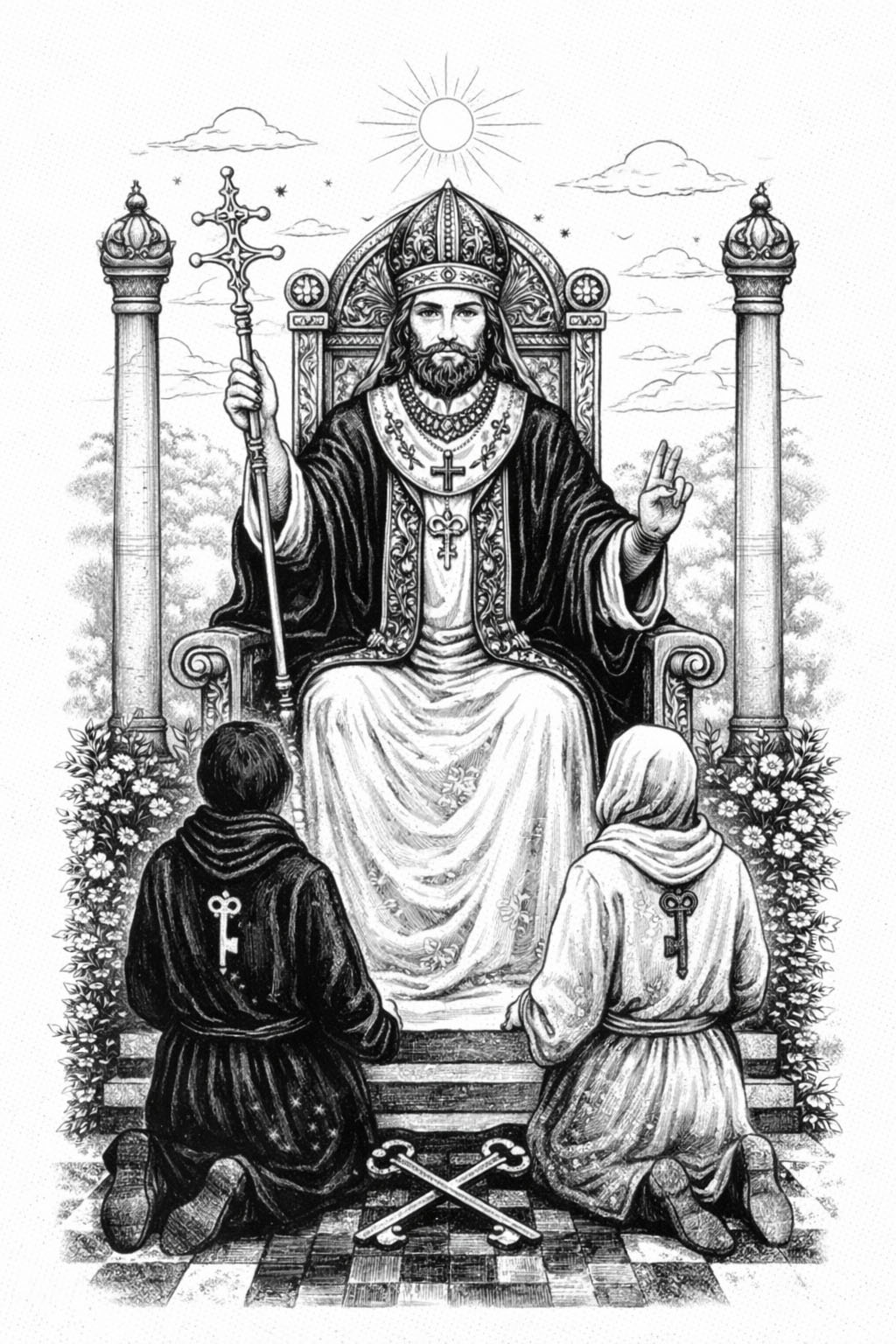
Контекст
Кохання та романтика
Ієрофант у контексті любові символізує структуру, спільні цінності та роль соціальних або релігійних норм у відносинах. Він вказує на важливість усталених традицій, формальних зобовʼязань і явних правил співжиття — шлюбу, партнерських угод або моральних принципів, які об'єднують людей. Ця карта також підкреслює значення наставництва, підтримки з боку зовнішніх інстанцій (сімʼя, громада, радник) і навчання в парі: коли один або обидва партнери приймають на себе роль вчителя чи порадника, це може впорядкувати стосунки, але також створити ієрархії.
Аналітично, Ієрофант пропонує звернути увагу на те, наскільки гармоніюєте ви з очікуваннями одне одного й з соціальними нормами, чи узгоджені ваші уявлення про обовʼязок, відданість і довгострокові плани. Він не дає конкретних прогнозів, натомість підкреслює теми, які варто розглянути: спільні переконання, готовність до формалізації стосунків, баланс між особистою свободою й обовʼязками, ризик конформізму або залежності. У розриві з традицією або при відчутті гноблення карта може сигналізувати про необхідність аналізу ролей і влади в парі.
Якщо вважаєте Ієрофанта релевантним, корисно об'єктивно дослідити питання сумісності цінностей, очікувань щодо інституційного визнання та рівнів підтримки з боку близького оточення. Поставте собі запитання про те, чи відповідають прийняті вами рамки вашим справжнім переконанням, чи є в них місце для розвитку, і чи комфортно вам у ролях, які пропонуються. Карта служить інструментом для роздумів про стійкість, структуру і моральні підвалини відносин, а не як вказівка на неминучі події.
Кар'єра та посада
Карта Ієрофанта у кар'єрному контексті описує роль інституційних структур, формальної освіти і професійних норм у професійному розвитку. Вона підкреслює значення наставництва, офіційних кваліфікацій, членства в професійних організаціях і побудови кар'єри через встановлені шляхи та процедури. Така карта сигналізує про ситуації, коли успіх залежить від дотримання корпоративних правил, етичних стандартів і рекомендацій більш досвідчених фахівців, а також про можливість зайняти роль вчителя або тренера всередині організації.
Аналітично це означає, що досягнення просування може вимагати інвестицій у формальне навчання, сертифікацію або активну роботу з наставником; важливими є мережі через професійні спільноти та прийняття корпоративної культури. Також карта вказує на структуру і стабільність, але вимагає уваги до ризику ригідності: надмірна орієнтація на традиції або авторитет може обмежувати креативність і гнучкість у змінах ринку. Для практичного застосування корисно критично оцінити, які правила сприяють довгостроковим цілям, а які слід адаптувати, шукати наставників і ресурси для підвищення кваліфікації та враховувати баланс між відповідністю стандартам і потребою в інноваціях.
Значення фінансів
Ієрофант у фінансовому контексті часто вказує на роль інститутів, правил і традиційних підходів. Карта підкреслює значення структурованих рішень: офіційних договорів, банківських продуктів, довгострокових планів (наприклад, пенсійних накопичень або іпотеки) і консультацій з кваліфікованими фахівцями. Вона акцентує увагу на необхідності дотримуватися регуляторних вимог, уважно читати умови угод і враховувати репутацію контрагентів та інституцій.
У навчальному аспекті Ієрофант радить розглядати фінанси як дисципліну, де важливі системність і процедура: планування бюджету, документовані рішення, податкова відповідність і професійні поради допомагають зменшити ризики. Водночас карта сигналізує про потенційну схильність до консерватизму і повторення усталених моделей, що може обмежувати готовність до нових можливостей або інноваційних інструментів. Існує також ризик надмірної довіри до авторитетів або сліпого наслідування стандартних порад без критичної оцінки.
Практично це означає поєднувати повагу до правил і експертизи з критичним аналізом: перевіряти кваліфікацію консультантів, порівнювати пропозиції, зважувати співвідношення ризику й доходності та враховувати альтернативи, не нехтуючи безпекою. Ієрофант у фінансах — про стабільність через структуру, але корисно балансувати її зі здоровим скептицизмом і гнучкістю.
Значення сім'ї
Карта Ієрофант (Верховний жрець) у контексті сім’ї означає акцент на структурах, традиціях і ролях, що формують сімейне життя. Це образ інституційної мудрості — старших, батьків, роду, релігійних чи культурних установ, які передають норми, ритуали і правила поведінки. У побуті це може проявлятися через дотримання сімейних звичаїв, офіційні угоди, потребу в пораді старшого чи фахівця, а також у встановлених очікуваннях щодо ролей і відповідальностей.
Аналітично це запит на взаємодію з авторитетом: чи цей авторитет підтримує розвиток і стабільність, чи нав’язує обмеження, що блокують індивідуальність. Ієрофант підкреслює важливість навчання та передачі знань — виховання, релігійні або культурні практики, ритуали переходу (шлюб, обряди, сімейні традиції). Водночас карта нагадує про ризик формалізму: коли правила стають догмою, а комунікація закривається.
Корисно розглядати питання: які сімейні традиції цінні і чому; де потрібна адаптація; хто в сім’ї виконує роль «порадача» або посередника; чи є потреба в зовнішньому консиліумі (сімейному консультанті, духовному наставникові, юристі). Практичний підхід — аналізувати, які структури спрямовані на підтримку, а які перешкоджають, і шукати порозуміння між повагою до спадщини та повагою до індивідуальних потреб членів сім’ї.
Психологія та розум
Карта Ієрофанта у контексті психологічного стану описує акцент на структурах, правилах і внутрішніх або зовнішніх авторитетах, які формують поведінку й світогляд. Це положення свідчить про потребу в упорядкуванні, впевненості через усталені системи цінностей, навчанні й належності до групи з чіткими традиціями. Психологічно це може проявлятися як схильність шукати поради в офіційних джерелах, покладання на настанови наставника чи інституції, а також відчуття комфорту при дотриманні норм і ритуалів.
У тоншому вимірі Ієрофант вказує на внутрішню структуру переконань, які керують виборами; індивід може відчувати потребу узгодити свої дії з моральними або культурними стандартами. Тіньовий бік цього стану — ригідність, догматизм або втрата здатності критично переосмислювати прийняті установки, що може обмежувати особистісний розвиток і творчу самостійність. Водночас карта не оцінює позитивно чи негативно, а позначає наявність певного режиму опори на авторитет і традицію.
З практичної точки зору така позиція пропонує сфокусуватися на розпізнаванні джерел своїх переконань, відстеженні, де присутня власна усвідомлена згода, а де автоматичне наслідування. Корисно аналізувати, чи підтримують ці структури особисті цілі і емоційний добробут, і в разі потреби працювати над поєднанням поваги до традиції з розвитком автономії. Такий підхід робить значення карти корисним для навчання, супервізії, терапії та усвідомленого вибору ролей у соціальному контексті.
Значення душі
Ієрофант у контексті душевного стану описує внутрішню орієнтацію на структуру, усталені цінності й зовнішню підтримку. Це стан, у якому людина відчуває потребу в поясненнях, правилах, повчанні або наставництві; їй заспокоює приналежність до групи й участь у ритуалах, адже це надає передбачуваності й відчуття смислу. Одночасно Ієрофант характеризує внутрішню впевненість у моральних нормах і схильність до обмеження сумнівів — це може бути корисно для послідовної поведінки, але створює ризик ригідності та неприйняття іншого погляду.
З погляду самопізнання карта вказує на момент, коли варто розпізнати, які з переконань дійсно власні, а які успадковані чи нав’язані оточенням. Повернення до навчання, духовної практики чи участі в спільноті може дати стабільність і ресурс для розвитку; водночас корисно критично осмислити традиції, щоб уникнути втрати індивідуальності. У терапевтичному чи освітньому контексті Ієрофант підкреслює цінність наставництва, структури й свідомого вибору системи цінностей як шляхів до більшого внутрішнього порядку.