Контекст
Кохання та романтика
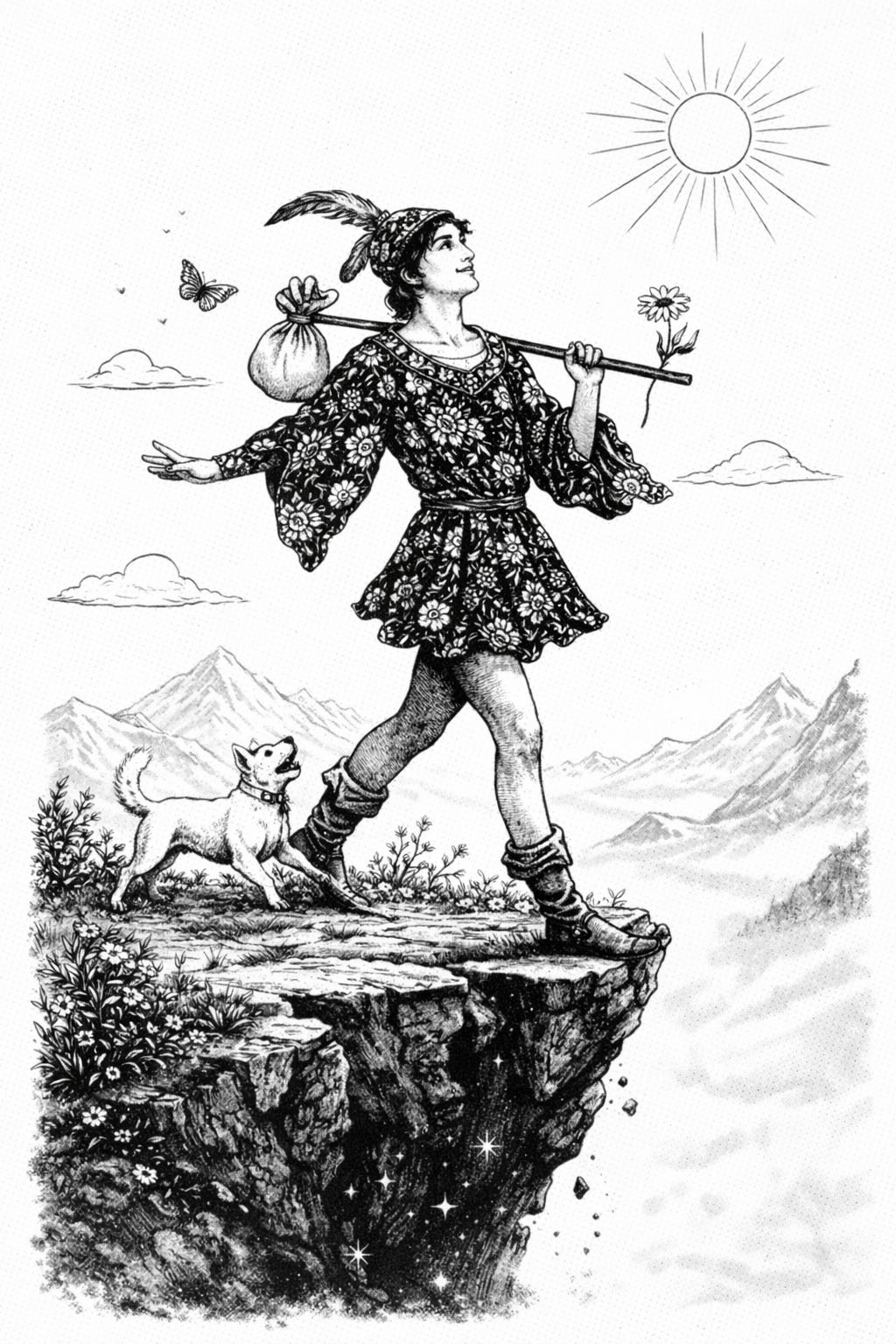
Таро Дурень у контексті любові представляє архетип початку, відкритості й потенціалу. Символічно це образ людини, готової ступити у стосунки без тягаря минулого, з готовністю до експерименту й вірою у нові можливості. У читанні карта описує емоційну позицію, яка схильна до ризику, наївності та спонтанності: початок знайомства, період флірту або внутрішня готовність відпустити контроль і впустити невизначеність.
Аналітично Дурень підкреслює простір вибору й необхідність свідомого відношення до ризику. Як позитивна якість він вказує на відкритість, легкість у взаємодії, бажання пробувати нові форми близькості та оновлювати стосунки. У парі це може означати відновлення інтересу через гру, пригоди чи готовність обговорювати невизначені питання замість уникнення. Для одинаків карта часто відображає період готовності до знайомств або внутрішню зміну ставлення до пошуку партнера.
Тіньова сторона Дурня — імпульсивність, брак обачності та ухилення від відповідальності. У любовних відносинах це проявляється як поспішні рішення, ідеалізація партнера, небажання або нездатність розглядати наслідки власних дій. Також може вказувати на уникнення серйозності й прагнення до постійних нових вражень за рахунок стабільності.
При тлумаченні важливо враховувати контекст запитання та суміжні карти: Дурень сам по собі вказує на потенціал і тенденції, але не дає завершеної картини динаміки стосунків. Осмислення карти може зосередитися на питаннях готовності ризикувати, балансі між довірою і обачністю, а також на тому, як зберегти відкритість, не втрачаючи здатності до рефлексії. У навчальному підході ця карта корисна для аналізу мотивацій і установок, що формують поведінку в коханні, більше ніж для пророцтва конкретних подій.
Кар'єра та посада
У професійному контексті карта Дурень (The Fool) позначає початок, відкритість до нового і потенціал для неочікуваних можливостей. Символіка карти підкреслює готовність почати шлях без тягаря минулого, розуміння ризику як невід’ємної частини руху вперед і прагнення до експериментів та творчих рішень. Це стан, коли важливі допитливість, гнучкість і віра в можливості, навіть якщо ще немає чіткої карти шляху.
З практичної точки зору в кар’єрі це може відповідати старту нової ролі, переходу в іншу сферу, запуску проєкту або виходу на підприємницьку стезю. У таких ситуаціях корисно оцінювати потенціал навчання та розвитку, планувати невеликі кроки для перевірки ідей і шукати можливості набуття навичок у процесі. Дурень часто вказує на інноваційний підхід і готовність відкривати нетрадиційні шляхи.
Водночас карта нагадує про ризики, пов’язані з недосвідченістю, наївністю або відсутністю підготовки. Імпульсивні рішення можуть призвести до зайвих втрат або непотрібних ускладнень, особливо щодо фінансових і юридичних аспектів. У професійному житті це сигнал бути уважним до деталей, читати умови договорів і передбачати базові запобіжні заходи.
Освітній висновок: Дурень підкреслює цінність початку і творчого ризику в кар’єрі, але водночас наголошує на необхідності балансувати ентузіазм із практичною підготовкою. Планування малих експериментів, поступове накопичення досвіду та пошук порад від більш досвідчених колег допомагають використати потенціал цієї карти без зайвих ризиків.
Значення фінансів
У фінансовому контексті Туз або Дурень (The Fool) виступає як образ початку, ризику та відкритості до нового. Символіка карти підкреслює готовність розпочати шлях без обтяження минулим, легкість і прагнення до експериментів — ці якості вказують на потенціал для нових джерел доходу, нестандартних підходів до інвестицій або вирішення фінансових питань ідейним, імпульсивним способом.
Аналітично це означає, що ситуація пов'язана з високою невизначеністю і можливістю як вигідних, так і невигідних наслідків. Карта акцентує на важливості оцінки ступеня ризику: відсутність історичних даних або досвіду може створювати можливість для інноваційних рішень, але одночасно підвищує ймовірність помилки через недостатнє планування. У таких випадках доречно розглядати невеликі тестові кроки, пілотні проєкти або поступове нарощування участі замість масштабних одноразових вкладень.
В інтерпретації також варто враховувати баланс між довірою до інтуїції і потребою в аналізі. Символи карти нагадують про чистоту намірів і відкритість новому, але в практичному фінансовому управлінні доцільно супроводжувати інтуїтивні рішення фактами, розрахунками та адекватними механізмами контролю ризику. Корисним є встановлення меж втрат, резервного фонду та чіткого критерію для виходу з позицій.
Якщо питання пов'язане з кар'єрою або підприємництвом, Дурень часто сигналізує про перспективу початку нового проекту або зміни напряму. Аналітичний підхід передбачає підготовку базових бізнес-планів, перевірку припущень через ринок і отримання зовнішніх консультацій при відсутності власного досвіду. У випадку інвестицій важливо звернути увагу на диверсифікацію і прозорість інструментів, щоб пом'якшити наслідки невдач.
Загалом The Fool у фінансах позначає потенціал і ризик одночасно; його порада полягає не в безумовному відмовленні від змін, а в усвідомленому застосуванні сміливості: поєднувати прагнення до нового з граничною увагою до управління ризиком і плануванням.
Значення сім'ї
Карта «Шут» у сімейному контексті вказує на початкову стадію, відкритість і готовність до змін. Вона підкреслює наївність, спонтанність і прагнення до свободи серед членів родини — це може проявлятися як бажання випробувати нові ролі, приймати нестандартні рішення або давати дітям більше простору для самостійного досвіду. Позитивно це може означати свіжий подих у відносинах, ігрову легкість, готовність пробачати помилки й вчитися разом, що сприяє розвитку довіри й креативності. Водночас карта нагадує про ризики: недостатня підготовленість, недотримання обов’язків або нехтування безпекою можуть провокувати конфлікти або непорозуміння, особливо якщо хтось у сім’ї діє імпульсивно без урахування наслідків для інших. У практичному сенсі значення цієї карти радить звернути увагу на баланс між свободою й відповідальністю в сімейних ролях, створення безпечного простору для експериментів і відкритого діалогу про очікування та межі. Освітній акцент — розпізнавати, де корисна довіра і підтримка для росту, а де потрібні чіткі домовленості, щоб уникнути необачних вчинків, які можуть пошкодити стосункам або добробуту родини.
Психологія та розум
Аркан Дурень у вимірі психологічного стану репрезентує позицію початку, відкритості та внутрішньої легкості — стан, у якому домінують допитливість, віра в можливості й готовність кинутися у нове без громіздких планів. Це може означати емоційну невимушеність, здатність довіряти інтуїції та експериментувати з життям, а також відчуття свободи від очікувань і соціальних рамок. Водночас той же психологічний профіль містить ризики: схильність до наївності, імпульсивних рішень, недооцінки небезпек або ухилення від відповідальності. У крайніх проявах Дурень може вказувати на розгубленість, поверхневість вибору або тенденцію до самозахисту через відрив від реальності (наприклад, заперечення проблем чи емоційна дисоціація).
З аналітичної точки зору, корисно розглядати цей стан як потенціал для розвитку: відкритість і ризик можуть додати творчої енергії й сприяти особистісним зростанню, якщо поєднати їх із базовою усвідомленістю та мінімальною підготовкою. Підхід до інтеграції включає відпрацювання уважності й перевірки реальності, розділення імпульсу й дії на менші експерименти, а також усвідомлення власних меж і відповідальностей. У психологічному аналізі Дурень корисний як індикатор потреби в новому досвіді й одночасно як нагадування про необхідність балансу між спонтанністю та обережністю.
Значення душі
Шут як опис душевного стану вказує на відкритість до нового, легкість у сприйнятті світу й готовність рухатися вперед без обтяження минулим. Це стан внутрішньої свободи й довіри, коли людина відчуває допитливість, спонтанність і пристрасть до експериментів; часто супроводжується відчуттям, ніби життя пропонує необмежені можливості. Водночас така позиція може містити дитячу наївність та недостатню обережність: відсутність плану або нехтування наслідками підвищує ризик помилок і вразливості. Психологічно Шут відображає активацію внутрішньої дитини, творче натхнення і готовність до ризику, але також відсутність структурованої підтримки й життєвого досвіду, які могли б пом’якшити наслідки імпульсивних вчинків. Аналітично цей архетип описує потенціал для зростання через проби й помилки, водночас підкреслює потребу в усвідомленості й поступовому набутті навичок відповідальності. Як предмет роздуму, образ Шута допомагає розпізнати, коли свобода й допитливість служать ресурсом, а коли перетворюються на джерело небезпек або блоків у досягненні стабільності.